익숙한 문자에서 도시의 예술로
세종한글비엔날레의 막이 오르다
글. 2027 세종한글비엔날레 전시기획자 권예지
우리는 매일 한글 속에서 살아가고 있습니다. 아침에 눈을 떠 스마트폰 메시지를 확인하고, 길거리의 간판을 읽으며, 누군가에게 마음을 전하는 순간에도 언제나 한글이 함께합니다. 숨을 쉬듯 당연하고 익숙해서 우리는 한글의 특별함을 간혹 잊곤 합니다. 소리를 바탕으로 자음과 모음을 조합하며 무수히 많은 말과 뜻을 표현하는 문자, 한글. 한글은 누구나 쉽게 배우고 자기 뜻을 펼칠 수 있어야 한다는 세종대왕의 따뜻한 애민 정신과 세상에 없던 문자 체계를 창조해 낸 혁신성이 담겨있습니다. 세종시가 지금 ‘한글 문화도시’로 나아가는 이유가 여기에 있습니다. 한글을 과거의 유산으로 박제하지 않고, 오늘의 예술과 산업, 우리의 평범한 일상에서 끊임없이 살아 움직이는 문화로 확장하려는 전환점, 그 중심에 ‘세종한글비엔날레’가 있습니다.
첫해의 씨앗, 비로소 시작된 도약
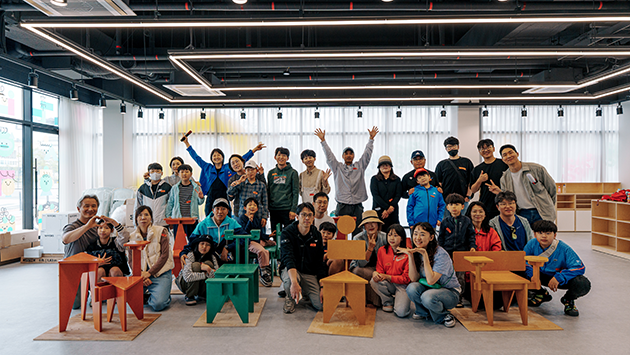
이 전환점의 시작은 지난해 세종시 곳곳에 심은 ‘한글문화의 씨앗’이었습니다. 한글문화도시센터를 주축으로 전시, 공연 그리고 관광까지 아우르는 20개의 사업이 쉼 없이 달렸습니다. 시민들은 자신의 손으로 한글 문화도시를 대표할 글꼴을 함께 만들고, 가구와 노래, 일상의 상품 속에 한글의 숨결을 불어 넣었습니다. ‘한글상점’도 한글을 소비하는 것을 넘어 경험하는 문화 거점으로 거듭났습니다.
|
|
|
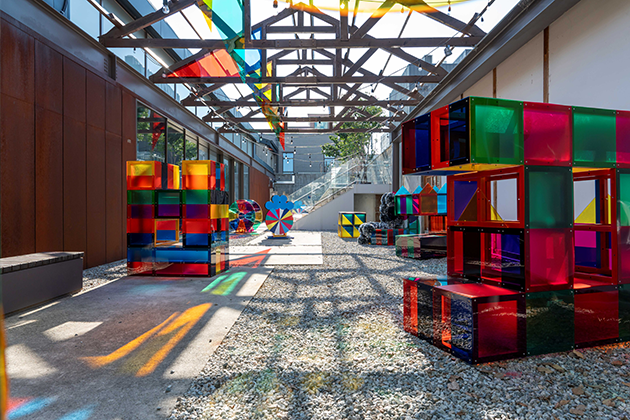
그리고 2025년 한글 국제 프레 비엔날레 <그리는 말, 이어진 삶>으로 한글문화의 싹을 틔웠습니다. 국내외 예술가가 한글의 조형성을 넘어 설치, 가상현실(VR) 등 동시대 예술로 한글의 창의성과 같은 가치를 표현했습니다. 이곳에서 시민 도슨트와 어린이들이 전시장 곳곳을 누비며 느낀 것은 하나였습니다. 한글이 보고 느끼고 마음을 울리는 생명력 있는 문화라는 것을요. 세종시에서 한글은 지역 정체성이자 더 나아가 세계와 소통하는 예술 언어로 영역을 넓혀갑니다.
네모진 글자, 어떻게 현대미술이 되는가
그렇다면 우리가 쓰는 글자가 어떻게 예술이 될 수 있을까요? 현대미술 안에서 문자는 단순히 정보를 전달하는 텍스트에 머무르지 않습니다. 글자의 독특한 형태, 반복되는 배열, 그 속에 담긴 움직임과 소리 자체가 작품입니다. 이미 수많은 작가가 자기 생각과 감각을 담는 예술 매체로 문자를 바라보았습니다. 세종한글비엔날레가 주목하는 점도 바로 이 지점입니다. 한글은 자음과 모음을 자유롭게 해체하고 조합하며 장르를 넘나들기에 가장 완벽한 구조를 지니고 있습니다.
세종한글비엔날레는 단순히 한글의 아름다운 외형을 보여주는 것을 보여주는 것을 넘어 한글이 가진 독창적인 구조와 창제 정신이 오늘의 기술, 그리고 시대적 질문과 만났을 때 얼마나 거대한 예술적 변주가 가능한지 그 가능성을 전 세계에 펼쳐 보이는 장입니다.
비엔날레로 도시 전체가 미술관이 되다
‘비엔날레(Biennale)’는 이탈리아어로 ‘2년마다’라는 뜻입니다. 1895년 이탈리아 베네치아에서 시작된 이래 비엔날레는 전 세계 예술가들이 모여 시대의 화두가 되는 질문을 던지고, 시각의 전환,의견 공유가 이루어지는 예술가의 학술대회라고 볼 수 있습니다.
세종한글비엔날레 역시 마찬가지입니다. ‘한글’이라는 소재를 다룬 작품을 나열하는 데 그치지 않고, 한글이 오늘날의 공간, 삶과 융합되어 어떤 새로운 의미를 만들어 낼 수 있는지 세계를 향해 질문을 던질 준비가 되었습니다.
|
|
|
출처 : 2025 한글 국제 프레 비엔날레
빠키(VAKKI) 보이지 않는 말의 구조: 형체 너머의 흐름 The Architecture of Silence: Flowing Beyond the Visible(2025) |
|
|
지난해 프레 비엔날레가 조치원 1927 아트센터와 산일제사라는 세월의 흔적이 남아 있는 구도심을 거점으로 삼았다면, 앞으로 펼쳐질 한글 비엔날레는 달라질 예정입니다. 한글 비엔날레 전시관부터 세종예술의전당, 도시상징광장 그리고 금강을 가로지르는 이응다리까지. 시민들이 매일 걷는 공원과 출퇴근하는 거리가 전시장이 되고, 도시를 걷는 행위 자체가 예술을 감상하는 여정이 되는 것, 세종시 자체가 한글의 거대한 무대가 되는 순간입니다.
세종한글비엔날레를 만드는 사람들: 새로운 시선이 던지는 질문
도시 전체를 캔버스로 삼는 프로젝트는 한 사람의 아이디어만으로 완성되지 않습니다. 한글, 전시, 언어, 행정 등 서로 다른 분야의 수많은 지혜가 촘촘하게 엮여야 비로소 가능합니다. 세종한글비엔날레 조직위원회가 전체적인 기반을 다지고 분야별 자문위원이 전문적인 의견을 붙이면 이 모든 아이디어를 하나의 매력적인 이야기로 꿰어내는 사람이 바로 ‘예술감독’입니다.
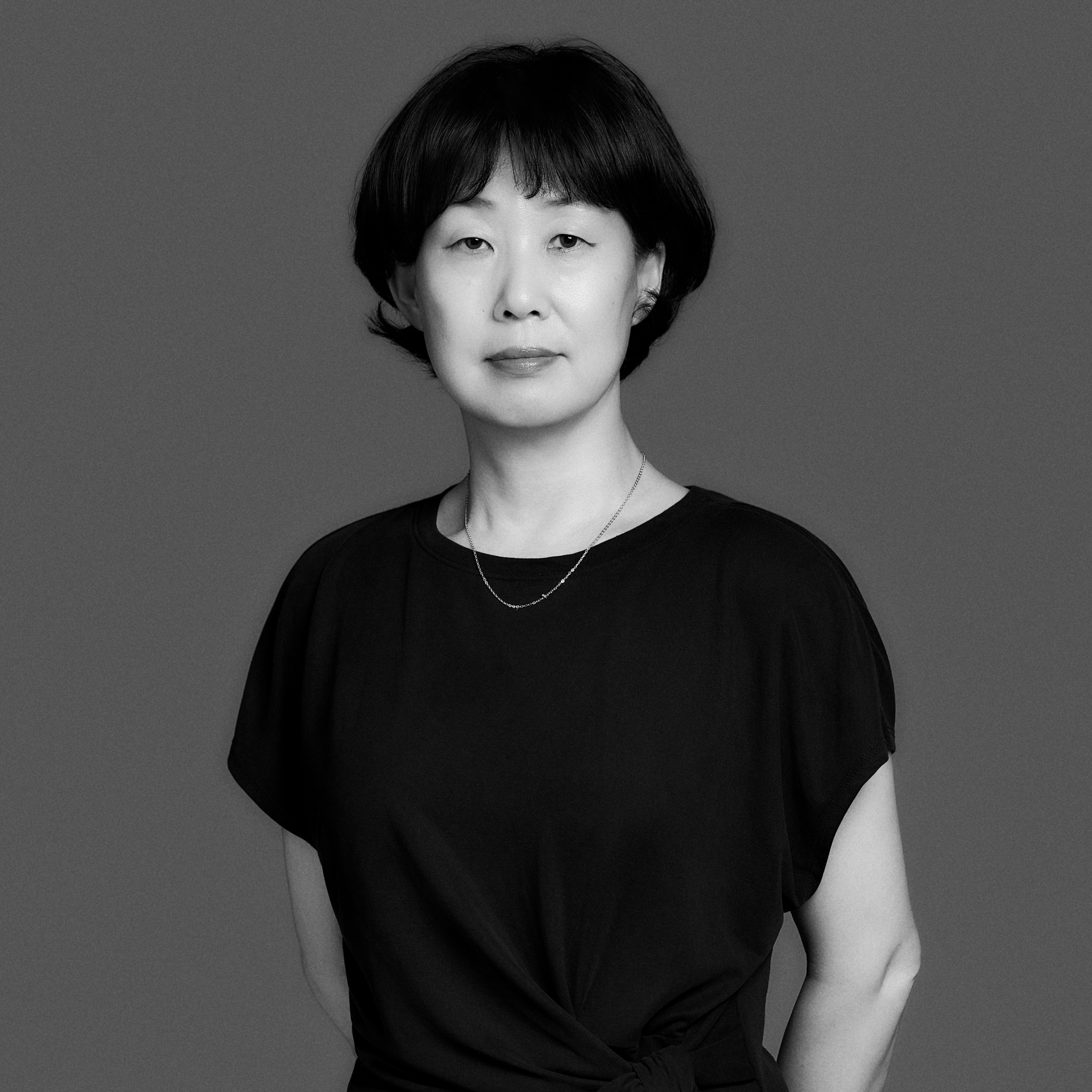
드디어 올해 베일에 싸여있던 ‘세종한글비엔날레’를 이끌 예술감독이 선임되었습니다. 국립현대미술관에서 약 30년간 몸담으며 굵직한 전시를 기획한 박미화 예술감독이 그 주인공입니다. 수많은 작품과 세종 그리고 한글은 예술감독의 날카로운 시선에서 어떤 모습으로 2027년에 우리에게 어떤 질문을 할까요. 그리고 우린 어떤 전환점을 맞이할까요.
|
|
|
한글을 예술로 읽는 시선
글. 2027 세종한글비엔날레 예술감독 박미화
배경
세종시는 2027년 하반기에 ‘세종한글비엔날레’를 개최합니다. 세종한글비엔날레는 한글의 예술적 가치 확산, 언어와 예술의 융합, 글로벌 연결성 강화, 도시 재생과 문화 브랜딩을 표방하면서 지난해에 프레 비엔날레로 출범하였습니다. 세종한글비엔날레는 소통을 위한 한글의 도구적 기능을 넘어 예술로서의 가치와 도시 문화의 결합으로 확장하여 다양한 현대미술을 유입하여야 하는 과제를 안고 있습니다.
한글은 글자인 동시에 완벽한 조형성을 갖고 있습니다. 우리는 매일 책을 읽고, 핸드폰을 누르며 한글을 사용하고 있지만 정작 한글이 가진 독창적이고 미학적인 가치를 간과하고 있습니다. 세종한글비엔날레는 우리에게 너무나 익숙해져 있는 이 한글의 아름다운 조형성을 시각 예술 영역으로 끌어내는 역할을 하게 될 것입니다. 그것은 단순히 글자의 조합이나 보이는 것에만 국한되지 않고 역사적·철학적 배경에 더 초점을 두고자 합니다.
2027년 제1회 세종한글비엔날레의 주제는 ‘하늘과 땅과 사람’입니다. 한글 모음의 창제 원리인 천지인은 우주와 만물을 이루는 근본적인 요소로써 서로 분리되지 않고 하나로 조화를 이루어야 한다는 전통 동양 철학이자 한민족의 고유 사상입니다. 즉 하늘이 땅보다 높고 우월한 것이 아니라 동등한 가치를 지니며 유기적으로 서로 결합해 있고, 인간은 자연 위에 군림하는 존재가 아니라 자연의 이치를 몸소 실현하는 가장 영성적인 존재라는 천인합일(天人合一)의 정신입니다. 세종한글비엔날레는 이러한 천지인 각각의 의미와 상징적인 해석을 통해 현대미술을 유입시키고자 합니다. 천지인을 해석하면 다음과 같습니다.
첫째, 하늘입니다. 하늘은 둥근 모양이고 우주의 만물이 시작되는 가장 근본적인 원리에 해당합니다. 양의 기운을 가진 하늘은 시간, 변화, 운명, 무한함, 창조의 근원으로 해석하여 작가와 작품을 찾으려 합니다.
두 번째, 땅입니다. 땅은 네모 모양이고 평평한 땅을 형상화하고 있습니다. 만물이 발을 딛고 살아가는 터전이자 모든 것을 포용하는 어머니의 품을 나타냅니다. 공간, 안정, 포용, 인내, 기르고 베풂이라는 키워드로 설명됩니다.
마지막으로 사람입니다. 세로로 곧은 선은 곧게 서 있는 사람의 모습을 형상화하고 있습니다. 만물의 영장인 사람은 우주의 기운을 중재하고 만물과 소통하는 주체로서 인간의 이치를 나타냅니다. 인간의 음과 양의 기운이 완벽하게 조화를 이룬 영적 존재입니다. 문화, 창조적 행위, 매개, 진화, 사랑과 자비 등이 키워드입니다.
이상의 내용으로 세종한글비엔날레의 기본 주제와 방향을 염두에 두고 있습니다. 한글의 형태나 서체에서 더 나아가 철학적 배경과 미학적 의미를 해석하여 현대미술로 연결하여 구성하고자 합니다. 동시대 작가들의 다양한 개념과 영상, 사운드, 설치 그리고 타이포그래피, 디자인, 공예에 이르는 모든 매체와 부문을 열어두고 접근해 보려고 합니다. 관람객은 최종적으로 정제된 전시 공간에서 주제와 방향을 집약적으로 감상하실 수 있을 겁니다.
현재 세종시는 다채로운 거점형 대안 공간이 많은 유동적인 구조입니다. 공공 시립미술관이 아직 없어서 대형 국제 전시를 소화하기에 기반 시설의 한계가 있지만 세종시문화관광재단 산하의 전문 공간들이 많습니다. 현재 이러한 신도심 인프라를 적극 활용하여 지역 밀착형 전시가 나름 활발히 이루어지고 있습니다. 예를 들면 박연문화관 전시실, BRT 작은미술관, 조치원 1927 아트센터 등이 대중교통 거점이나 스마트시티 인프라 내에 있어 시민들의 관람이 일상적으로 이루어지는 장점이 있습니다. 그리고 젊은 층과 공무원 가구의 비율이 높아 기획 전시에 대한 시민들의 피드백이 빠르고 실험적인 예술에 대한 수용도가 높은 편입니다. 비록 분절되어 있는 전시 공간이지만 개별 거점 형태를 적극 활용하여 오히려 세종시 전체를 하나의 미술 공간으로 만드는 장기적인 프로젝트로 성장시켜 보고자 합니다. 또한 세종한글비엔날레는 도시 면적의 50% 이상이 공원, 녹지, 생태 습지로 채워져 있고, 축구장 62개 크기의 국내 최대 인공 호수인 세종 호수공원, 국립세종수목원 등이 도시 중심에 자리하고 있어 녹지공간이 매우 풍부합니다. 하늘 아래 넓은 녹지공간에서 사람들이 한글 조각과 상호작용하는 전시 형태는 한글이 가진 동양 철학적 자연관을 실현하는 방식이 될 겁니다. |
|
|
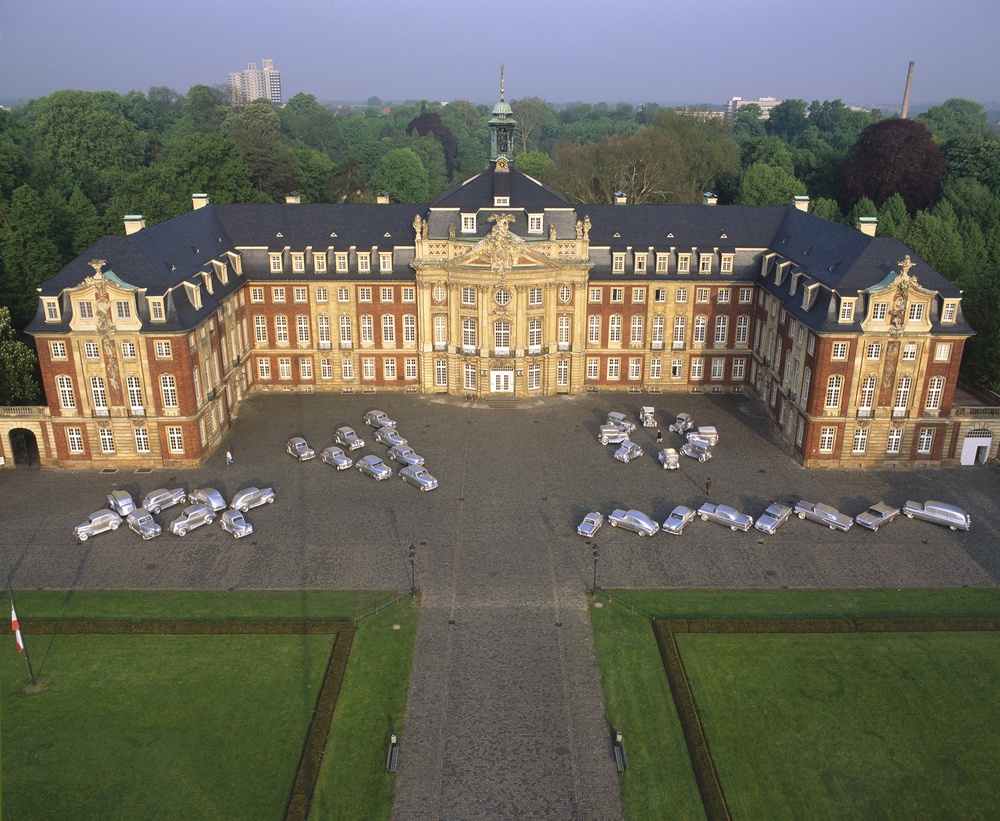
출처 : 뮌스터 조각 프로젝트 아카이브
백남준 Nam June Paik 32 Cars for the 20th Century: Play Mozart's Requiem Quietly
Installationsansicht 1997 © Paik Estate. Foto: Roman Mensing / artdoc.de |
|
|
10년마다 개최하는 독일의 뮌스터 조각 프로젝트는 도시를 활성화하고 세계적으로 알리는 데 성공한 사례입니다. 1970년대 중반 보수적이던 뮌스터 시민들에게 현대미술을 알리고자 시작한 이 프로젝트는 무료 공공 전시로 운영하며 시민들의 호응이 가장 좋았던 우수 작품은 시에서 구매해 도시에 영구 설치하기도 합니다. 초청받은 작가는 반드시 현장 조사를 한 장소 특정적인 작품을 해야만 하며, 시민들의 일상적인 생활 반경에 설치 하여야 합니다. 또한 공공 설치를 위해 시청, 지역기업, 일반 시민들과 수많은 대화와 조율 과정을 거쳐 최종 승인을 받아야만 실제로 설치할 수 있습니다.
이제 1년을 남겨둔 세종한글비엔날레는 한글의 미학적·철학적 해석을 바탕으로 국제 현대 미술제로 나아가야 합니다. K-컬처가 세계적으로 확산되고 있는 지금 한국인만의 문자가 아닌 세계인이 향유하는 시각예술의 글로벌 아이콘으로 브랜딩하여 글로벌 세종시, 글로벌 한글로 거듭날 수 있도록 각오를 다짐해 봅니다. |
|
|
한글이 도시의 문화가 되는 과정
박미화 예술감독에게 듣는 한글문화도시 세종의 다음 장 |
|
|
1. 감독님을 소개해 주세요
안녕하세요? 저는 이번 2027년도 제1회 세종한글비엔날레 예술 감독을 맡은 박미화입니다. 약 30년간 국립현대미술관에서 몸담고 있다가 이번에 이 세종한글비엔날레를 맡게 되어 매우 가슴설레는 상황입니다. 알게 모르게 저의 DNA가 전시와 작품으로 연결되어 있는 만큼 첫발을 내딛는 세종한글비엔날레를 잘 만들어보고자 합니다.
국립현대미술관에서 《이건희 컬렉션 특별전》, 《삼라만상》, 《이성자》, 《오늘의 프랑스 미술》, 《루이즈 부르주아》 등 많은 전시를 기획·관리하는 업무를 맡았습니다. 국립현대미술관이란 ‘국립 기관’에서 공적인 역할과 책임감을 항상 염두에 두며 전시를 통해 전달하고자 하는 메시지가 무엇인지 중점으로 생각해 왔습니다. 예를 들어 《이건희 컬렉션 특별전》은 ‘세기의 기증’이라는 평판을 받았던 만큼 기증의 사회적 선순환의 의미를 강조하고, 소장한 아름다운 작품을 대중과공유하는 것을 목적으로 했다면, 국제전 《오늘의 프랑스 미술》은 미술사적 의의를 전달하는 것을 중점으로 했습니다.
2. 세종한글비엔날레 예술감독을 지원하게 된 계기가 있다면 말씀해 주세요
1997년에 국립현대미술관의 학예연구사로 시작하여 2025년 12월에 퇴임하였습니다. 긴 공직 생활인 듯 하지만 정말 빨리 지나간 거 같습니다. 지금 나에게 남은 것이 무엇인가, 무엇을 했는가를 돌아보면 그래도 저에겐 ‘미술관’이 있었고 내가 지금 무언가를 잘할 수 있다면 ‘미술관에서 했던 일’이라고 생각합니다. 그래서 전시 관련 업무를 지원하게 되었습니다. 또 다른 이유를 굳이 하나 들자면, 국립현대미술관이라는 크고 안전한 울타리 내에서 ‘현대미술’만 쫓아가던 시각에서 벗어나 ‘한글’이라는 새로운 관점에서 미술을 바라보는 것도 매우 특별한 경험일 것으로 생각했습니다. 한글과 미술! 저에겐 매우 새로운 도전입니다.
3. 세종한글비엔날레 예술감독으로서 세종을 처음 바라보셨을 때 가장 인상 깊었던 도시의 모습은 무엇이었나요?
사실 저도 공무원이었기 때문에 세종시가 낯설지는 않지만, 정부세종청사라는 인식에 머물러 있습니다. 이번 세종한글비엔날레 감독에 지원하면서 세종시를 돌아 보고 느낀 소감은 여기저기 크고 작은 ‘도시 재생 공간’과 ‘녹지’가 많다는 것입니다. 도시 재생 공간은 사전 정보로 알고 다녔지만 ‘녹지’는 다니면서 눈에 들어와서 심적인 안정감을 느꼈습니다.그래서 세종시를 사람들에게 많이 알리자고 하는 생각이 강하게 들었습니다. 다만, 아쉬운 것은 도시 전체가 통일감보다 개성들이 강해 보였습니다. 개성이 드러나면서 통일을 이루는 조화는 사실 쉽지는 않지만, 세종한글비엔날레로 작은 실천을 해보려 합니다.
4. 앞으로 선보일 세종한글비엔날레는 어떤 주제와 방향을 중심으로 준비하고 계신가요?
가장 중요한 질문입니다. 앞으로 확정하기까지 계속 생각하고 고민해야 하지만 우선 주제로는 “하늘과 땅과 사람” 즉 천지인 사상을 확장하여 재해석해 보려고 합니다. 한글의 철학적 세계관, 독창성 그리고 과학적 원리를 제대로 알고 이를 세계와 공유한다는 의미입니다. 다음으로는 첫 세종한글비엔날레인 만큼 기본에 충실히 하고자 합니다. 한글이 만들어진 후, 역사적으로 활용된 사례에서부터 오늘날 한글 타이포그래피까지 글자의 형태와 서체의 변화도 포함할 계획입니다. 마지막으로 세계적인 문자까지 확대하여 그 속에서 한글의 의미를 되새겨 보는 구상을 하고 있습니다. 이상의 주제와 방향으로, 세계적으로 유행하고 있는 K-컬처에 동참하려고 합니다.
5. 앞으로 한글 문화도시 세종이 시민과 방문객에게 어떤 도시로 기억되기를 바라시나요?
전문적 시각을 배제한다면 ‘모든 것이 골고루 갖춰진 살기 좋은 도시’로 기억되길 바랍니다. 이미 세종시는 ‘행정’으로 특화되어 가고 있으므로 미술 문화까지도 도시 곳곳에 스며들어 정서적인 안정감이 드는 도시로 기억되기를 바랍니다.
6. 세종에서 펼쳐질 2027년 세종한글비엔날레는 어떤 모습일까요?
저도 많이 상상해 봅니다. 저 개인적으로는 실속 있는 것을 좋아하기 때문에 세종한글비엔날레를 오신 분이라면 후회하지 않도록 하고 싶습니다. 관람객들이 비엔날레에 오셔서 세종의 여기저기 찾아다니면서 소소하게 전시를 즐기는 관람객 모습을 많이 떠올립니다. 내실 있는 전시를 만들려고 합니다. 감사합니다.
|
|
|
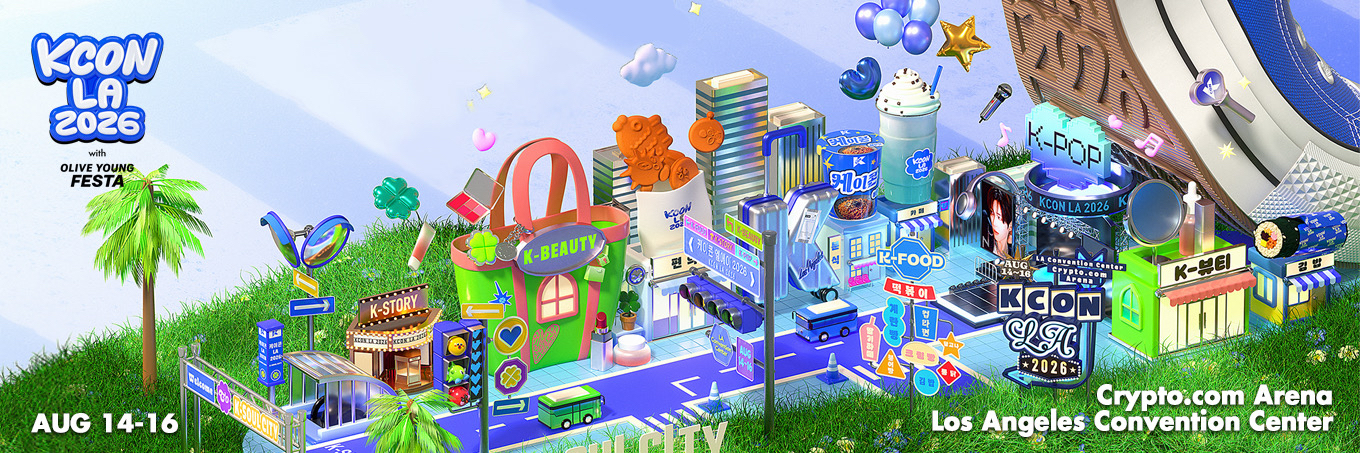
한글문화도시센터, 국립한글박물관과 함께 2026 KCON L.A. 가다!
2026. 8. 14.(금) - 8. 16.(일) / 미국 LA Convention Center
청구영언을 주제로 한글의 아름다움을 세계에 알리다 |
|
|
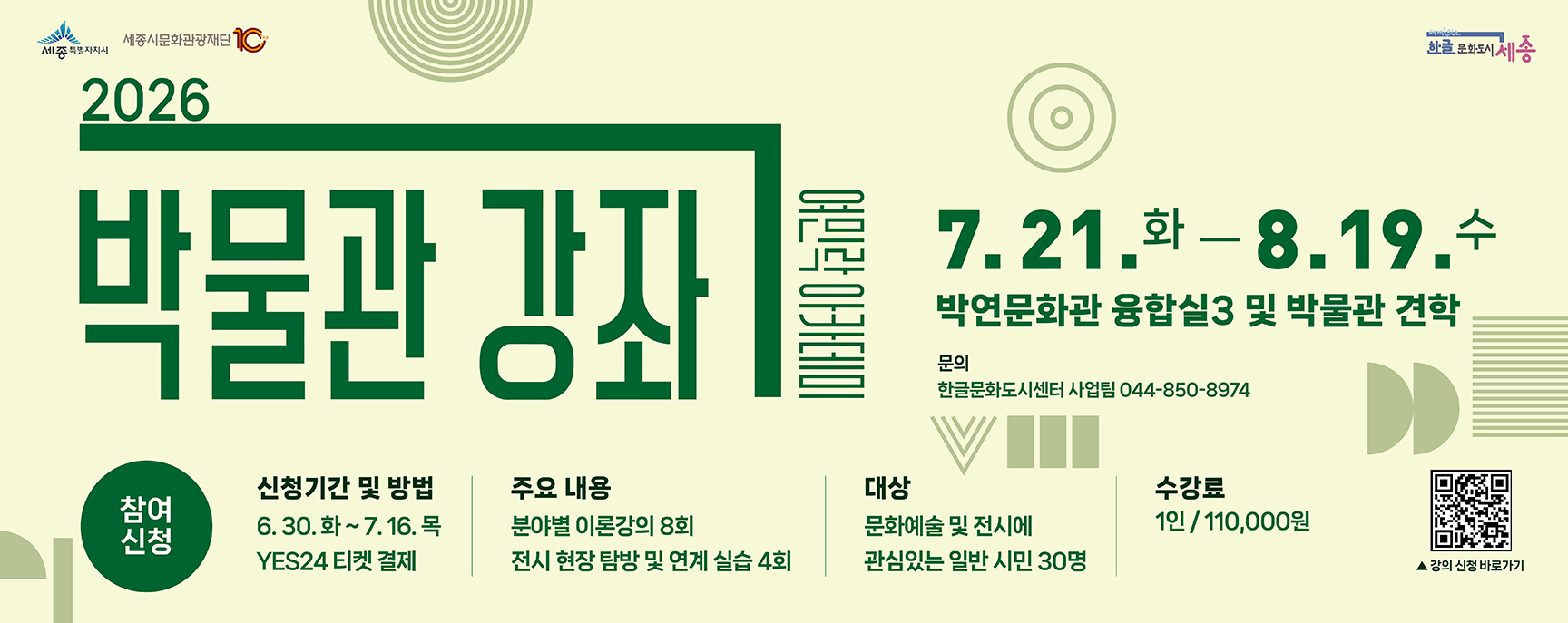
한글문화도시센터 박물관 강좌 성황리 진행 중!
2026. 7. 21.(화) - 8. 19.(수) / 박연문화관 등 |
|
|
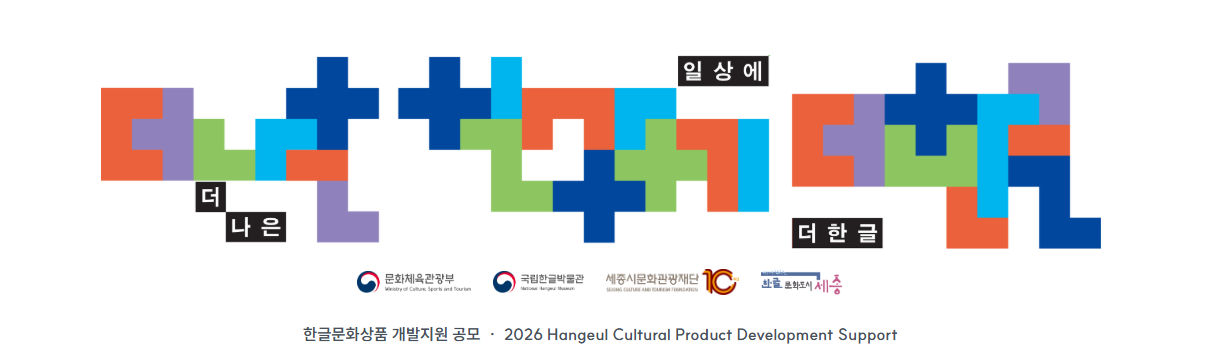
2026 한글문화상품 개발지원 공모전 최종 8건 선정
10월 한글문화산업전 출시 예정 |
|
|
From Familiar Letters to the Art of a City
The Sejong Hangeul Biennale Raises Its Curtain
2027 Sejong Hangeul Biennale Exhibition Organizer Kwon Yeji
We live surrounded by Hangeul every day. From the moment we wake up and check messages on our smartphones to reading street signs and sharing our feelings with others, Hangeul is always with us. Yet because it is as natural and familiar as breathing, we sometimes forget just how extraordinary it is.
Hangeul is a writing system that combines consonants and vowels based on the sounds of speech, enabling us to express an endless range of words and meanings. It embodies King Sejong the Great’s compassionate spirit of caring for his people—rooted in the belief that everyone should be able to learn easily and express their thoughts—as well as the remarkable innovation of creating an entirely new writing system unlike anything that had existed before.
This is precisely why Sejong City is now moving forward as a “City of Hangeul Culture.” Rather than preserving Hangeul as a relic of the past, the city seeks to expand it into a living, evolving culture that continuously takes shape through contemporary art, industry, and everyday life. At the heart of this transformation is the Sejong Hangeul Biennale.
Seeds Planted in the First Year, a New Leap Begins
The starting point of this transformation was the “seeds of Hangeul culture” planted throughout Sejong City last year. Led by the Hangeul Culture City Center, 20 projects spanning exhibitions, performances, and tourism ran without interruption. Citizens participated in creating a representative typeface for the City of Hangeul Culture, breathing the spirit of Hangeul into furniture, music, and everyday products. The Hangeul Store also evolved beyond a place where Hangeul-themed goods are simply purchased, becoming a cultural hub for experiencing Hangeul in new ways.
In 2025, those seeds began to sprout through the Hangeul International Pre-Biennale, Drawn Words, Woven Lives. Moving beyond the visual qualities of the writing system itself, artists from Korea and abroad explored the creativity and core values of Hangeul through contemporary art forms such as installations and virtual reality (VR). As citizen docents and children made their way through the exhibition spaces, they shared one realization: Hangeul is a living culture that can be seen, felt, and experienced emotionally. In Sejong City, Hangeul is expanding from a source of regional identity into an artistic language that communicates with the world.
How Do Square Letters Become Contemporary Art?
How, then, can the letters we use every day become works of art? In contemporary art, written characters are no longer limited to conveying simple information. The distinctive forms of letters, their repeated arrangements, and even the movement and sound contained within them become artworks in themselves. Many artists have already looked to writing as an artistic medium to house their thoughts and perceptions. This is precisely where the Sejong Hangeul Biennale trains its focus. Hangeul possesses the most ideal structure for crossing genres, allowing its consonants and vowels to be freely disassembled and recombined.
The Sejong Hangeul Biennale goes far beyond showcasing the visual beauty of Hangeul. It serves as a global platform to demonstrate the immense potential for artistic transformation that emerges when Hangeul’s original structure and founding philosophy meet modern technology and the defining questions of our time.
The entire city becomes an art gallery through the biennale
The word biennale means “every two years” in Italian. Since the first Venice Biennale was held in Italy in 1895, biennales have served as international gatherings where artists from around the world convene to raise questions about the pressing issues of their time, shift perspectives, and share ideas—functioning much like an intellectual conference for artists.
The Sejong Hangeul Biennale follows this very tradition. Rather than simply displaying a collection of works based on Hangeul, it is prepared to ask the world how Hangeul can fuse with contemporary spaces and lives to generate entirely new meanings.
Last year’s Pre-Biennale was anchored in the historic old downtown of Jochiwon, utilizing spaces like the Jochiwon 1927 Art Center and the Sanil Silk Reeling Factory area that still retain traces of time. The upcoming Sejong Hangeul Biennale is set to expand even further. From the Biennale Exhibition Hall and the Sejong Arts Center to the City Symbolic Plaza and the Ieung Bridge spanning the Geum River, the parks citizens walk through daily and the streets they commute along will become exhibition spaces. The very act of walking through the city will become a journey of appreciating art—the exact moment when Sejong City itself transforms into a grand stage for Hangeul.
The People Behind the Sejong Hangeul Biennale: New Perspectives, New Questions
A project that uses an entire city as its canvas cannot be completed through the vision of a single individual alone. It is only made possible when a multitude of insights from diverse fields—Hangeul, exhibitions, linguistics, and public administration—are intricately woven together. While the Sejong Hangeul Biennale Organizing Committee lays the foundational framework and advisory members contribute professional insights, the artistic director is the one who weaves all these ideas into a single, compelling narrative.
At last, the artistic director who will lead this year’s highly anticipated Sejong Hangeul Biennale has been appointed. The protagonist is Park Mi-hwa, who spent approximately 30 years at the National Museum of Modern and Contemporary Art, Korea(MMCA), curating major landmark exhibitions. Through the artistic director's discerning lens, what forms will those numerous artworks, the city of Sejong, and Hangeul take? What questions will they pose to us in 2027? And what turning point awaits us?
|
|
|
Reading Hangeul as Art
2027 Sejong Hangeul Biennale Artistic Director Park Mi-hwa
Background
In the latter half of 2027, Sejong City will host the inaugural Sejong Hangeul Biennale. Following its launch as a pre-biennale last year, the Sejong Hangeul Biennale aims to expand the artistic value of Hangeul, bridge language and art, strengthen global connectivity, and drive urban regeneration and cultural branding. Moving beyond Hangeul’s instrumental function as a tool for communication, the Biennale faces the task of integrating diverse forms of contemporary art by combining Hangeul’s value as art with urban culture.
Hangeul is both a writing system and a complete work of form. Although we use Hangeul every day—reading books and tapping on our smartphones—we often overlook its unique and aesthetic value. The Sejong Hangeul Biennale will serve to bring this familiar beauty of Hangeul into the realm of visual art, focusing more deeply on its historical and philosophical background rather than limiting itself to the combination of letters or visual appearances.
The theme of the 1st Sejong Hangeul Biennale in 2027 is Heaven, Earth, and Humanity. Rooted in traditional Eastern philosophy and the indigenous thought of the Korean people, the cheonjiin (heaven, earth, and humanity) principle—the foundational creative principle of Hangeul vowels—represents the core elements that constitute the universe and all things, which must exist in harmony rather than being separated. In other words, heaven is not superior to earth but shares equal value, organically combining with it. Meanwhile, humanity is not a ruler standing above nature, but the most spiritual existence that embodies the principles of nature—embodying the spirit of cheonin-hapil (the unity of heaven, earth, and humanity). The Sejong Hangeul Biennale aims to introduce contemporary art through these symbolic interpretations of heaven, earth, and humanity, structured as follows:
-
First, Heaven: Representing a circular shape, heaven corresponds to the fundamental principle from which all things in the universe originate. Possessing the energy of yang, heaven is interpreted through the keywords of time, change, destiny, infinity, and the source of creation, guiding our search for artists and artworks.
-
Second, Earth: Representing a square shape, earth embodies the flat ground. It is the foundation upon which all things live and breathe, symbolizing a mother’s embrace that encompasses all. It is described by keywords such as space, stability, inclusion, patience, nurturing, and bestowing.
-
Third, Humanity: The straight vertical line embodies a standing human being. As the lord of all creation, humanity acts as an intermediary for the universe’s energy and a subject that communicates with all things, representing the principle of mankind. It is a spiritual existence where the yin and yang energies of humanity are in perfect harmony. Keywords include culture, creative action, mediation, evolution, love, and compassion.
With these concepts in mind, we envision the core theme and direction of the Sejong Hangeul Biennale. Moving beyond the mere forms and typefaces of Hangeul, we intend to interpret its philosophical background and aesthetic significance and connect them to contemporary art. We plan to open up to all media and sectors—ranging from diverse concepts, video, sound, and installations by contemporary artists to typography, design, and crafts. Ultimately, visitors will be able to intensively experience the theme and direction within a refined exhibition space.
Currently, Sejong City features a fluid structure with various decentralized alternative spaces. While the city lacks a public municipal museum of art, posing infrastructure limitations for hosting large-scale international exhibitions, it possesses numerous specialized spaces affiliated with the Sejong Culture and Tourism Foundation(SJCT). By actively utilizing this new urban infrastructure, community-oriented exhibitions are operating quite actively. For instance, the exhibition hall at Park Yeon Cultural Center, the BRT Small Art Museum, and the Jochiwon 1927 Art Center are situated near public transit hubs and smart city infrastructure, allowing citizens to encounter exhibitions as part of their daily lives. Furthermore, due to the high proportion of younger demographics and public servant households, citizen feedback on curated exhibitions is prompt, and acceptance of experimental art is high. Although the exhibition spaces are fragmented, we aim to grow this into a long-term project that actively utilizes these individual hubs to transform all of Sejong City into a single, unified art space.
Moreover, Sejong City boasts abundant green spaces: over 50% of the city's area consists of parks, green zones, and ecological wetlands, featuring the Sejong Lake Park (the country's largest artificial lake, the size of 62 soccer fields) and the National Sejong Arboretum right at the city center. Exhibitions where people interact with Hangeul sculptures amidst vast green spaces under the open sky will serve as a way to realize the Eastern philosophical view of nature inherent in Hangeul.
The Skulptur Projekte Münster, held every ten years in Germany, is a successful example of revitalizing a city and promoting it globally. Initiated in the mid-1970s to introduce contemporary art to the conservative citizens of Münster, this project operates as a free public exhibition, with the city purchasing the most well-received and outstanding works to be permanently installed throughout the city. Invited artists are required to conduct thorough on-site research and create site-specific works, which must be installed within the daily living radii of the citizens. Furthermore, for a public installation to take place, the work must receive final approval only after extensive dialogue and coordination with the city hall, local businesses, and general citizens.
With just one year left until the Biennale, the Sejong Hangeul Biennale must evolve into an international contemporary art festival grounded in the aesthetic and philosophical interpretation of Hangeul. As K-culture spreads globally, I am resolved to brand Hangeul not merely as a writing system exclusive to Koreans, but as a global icon of visual art enjoyed by people worldwide, helping Sejong City and Hangeul emerge onto the global stage. |
|
|
How Hangeul Becomes Part of a City’s Culture
The Next Chapter of Sejong, a City of Hangeul Culture, as Told by Artistic Director Park Mi-hwa
For our readers, could you introduce yourself and your background?
Hello. My name is Park Mi-hwa, and I have been appointed as the artistic director for the inaugural Sejong Hangeul Biennale in 2027. After spending approximately 30 years at the National Museum of Modern and Contemporary Art, Korea (MMCA), taking on this new role with the Sejong Hangeul Biennale fills me with genuine excitement. In many ways, exhibitions and artworks have become deeply ingrained in my DNA. With that background, I hope to lay a strong, solid foundation as the Sejong Hangeul Biennale takes its very first steps.
During my time at the MMCA, I was involved in planning and managing numerous landmark exhibitions, including Lee Kun-hee Collection: Masterpieces of Korean Art, Samramansang: From KIM Whanki to YANG Fudong, Rhee Seundja, Contemporary Art from France, and Louise Bourgeois.
Working at a national institution, I always kept its public role and responsibilities at the forefront of my mind, focusing deeply on the core message each exhibition aimed to communicate. For instance, Lee Kun-hee Collection: Masterpieces of Korean Art was widely celebrated as a "donation of the century." Consequently, the exhibition highlighted the positive social impact of cultural philanthropy while aiming to share breathtaking masterworks with the general public. By contrast, French Art Today: Marcel Duchamp Prize focused primarily on conveying historical significance within the broader trajectory of art history.
What inspired you to take on the role of artistic director for the Sejong Hangeul Biennale?
I began my career as a curator at the MMCA in 1997 and retired in December 2025. Though it sounds like a long journey in public service, the years passed by in the blink of an eye. When I look back to see what remains from that time and what I accomplished, I realize that the museum has always been the center of my life. If there is something I know I can still do well, it is the kind of work I dedicated myself to at the museum. That realization naturally led me to apply for an exhibition-related role.
There was another compelling reason, too. Within the large, secure framework of a national institution like the MMCA, my focus was largely confined to contemporary art. I thought it would be a uniquely special experience to step outside that familiar perspective and view art through an entirely new lens: Hangeul. Hangeul and art—this is a wonderfully fresh challenge for me.
When you first explored Sejong in your capacity as artistic director, what struck you the most about the city?
Having worked as a public official myself, Sejong wasn't entirely unfamiliar territory to me, but my mental image of the city had long been tied strictly to the Government Complex Sejong.
However, as I explored the city while preparing for this role, what stood out to me most were the numerous urban regeneration spaces—both large and small—and the abundance of green areas scattered throughout Sejong. I already knew about the urban regeneration sites through prior research, but the greenery was something I organically discovered as I moved around, and it brought me a profound sense of emotional peace.
That experience strongly convinced me that Sejong deserves to be introduced to a much wider audience. If there was one slight regret, it was that the city as a whole displayed striking individual characteristics rather than a unified aesthetic. Achieving harmony while honoring individual uniqueness is never easy, but I hope the Sejong Hangeul Biennale can serve as a small, meaningful step toward creating that balance.
Could you share the core themes and vision you are preparing for the inaugural Sejong Hangeul Biennale?
This is perhaps the most critical question. While we will continue to deliberate and refine the concept before it is officially finalized, I am currently leaning toward an expanded, contemporary reinterpretation of the concept of heaven, earth, and humanity (cheonjiin).
The goal is to deeply understand Hangeul’s philosophical worldview, its brilliant originality, and its scientific principles, and to share those values with the world. Furthermore, because this is the very first Sejong Hangeul Biennale, I want to remain steadfastly faithful to the fundamentals. We plan to explore the historical evolution of Hangeul from its inception, trace the development of its letterforms and typefaces down to modern Hangeul typography, and even expand our scope to examine global writing systems—ultimately reflecting on the profound meaning of Hangeul within a broader international context.
Through these themes and directions, the Sejong Hangeul Biennale aims to ride the wave of the global K-culture phenomenon and contribute meaningfully to it.
How do you hope Sejong, as a City of Hangeul Culture, will be remembered by its citizens and visitors?
Putting aside my professional perspective for a moment, I hope Sejong is remembered as a wonderfully livable city where everything you need is harmoniously balanced. Since Sejong has already established a strong identity as an administrative hub, I hope that art and culture will weave their way into every corner of the urban landscape, leaving visitors and residents with a lingering sense of emotional comfort and stability.
What do you imagine the 2027 Sejong Hangeul Biennale in Sejong will ultimately look like?
I find myself imagining it quite often. Personally, I am someone who values practical substance and depth, so I want to ensure that anyone who visits the Sejong Biennale leaves feeling fully satisfied.
I often envision visitors arriving for the Biennale, wandering through various neighborhoods across Sejong, and naturally discovering and enjoying exhibitions nestled in small, unexpected corners of the city. My ultimate goal is to craft an exhibition of genuine substance, depth, and lasting resonance.
Thank you.
|
|
|
Heading to 2026 KCON L.A. with the Hangeul Culture City Center and the National Hangeul Museum!
20August 14(Fri) - August 16(Sun), 2026 LA Convention Center, USA
Spreading the Beauty of Hangeul Globally under the Theme of Cheonggu Yeongeon
|
|
|
Museum Lectures by the Hangeul Culture City Center Successfully Underway!
July 21(Tue) - August 19(Wed), 2026 Park Yeon Cultural Center and other venues
|
|
|
8 Final Entries Selected for the 2026 Hangeul Cultural Product Development Support Contest
Scheduled to be released at the Hangeul Culture Industry Exhibition in October
|
|
|
발행인 박영국
편집인 양유정
기획 임진아
편집 권예지
필진 박미화
진흥 김나현, 홍예원
디자인 ㈜웰리더메오
발행처 (재)세종시문화관광재단
세종특별자치시 갈매로 387
044-850-8952 www.sjcf.or.kr
Publisher Park Younggoog
Production Director Yang Yoojeong
Managed by Lim Jina
Editor Kwon Yeji
Contributor Park Mi-hwa
Promotion Kim Nahyun, Hong Yewon
Design (Co)Weleader MEO
Published by Sejong Culture and Tourism Foundation
Galmae-ro 387, Sejong Special Self-Governing City
+82-044-850-8952 www.sjcf.or.kr
|
|
|
|
|