왜 지금, 세종에 비엔날레인가-‘결핍’이란 자산 활용법
글. 정준모(박물관학, 큐레이터, 전 국립현대미술관 학예연구실장, 1996~2006)
대한민국의 지방자치단체치고 축제 없는 곳이 없고, 그 연장선에서 너도나도 ‘비엔날레’라는 이름을 내건 행사가 삼십여 개를 훌쩍 넘기지만, “왜 비엔날레인가”라는 질문에 명료하게 답할 수 있는 곳은 거의 없다. 세종시가 미술제를 준비한다면 먼저 답 해야 할 것은 “무엇을 보여줄 것인가”가 아니라 “왜 축제가 아니라 미술제(비엔날레)라야 하는 가”이다. 지역 홍보·관광수익 확대라는 행정적 목표와 동시대미술의 담론 생산이라는 예술적 목표 사이에서 어느 쪽도 온전히 달성못하는 국내 비엔날레의 만성적 정체성 분열은 세종이 꼭 피해야 할 길이다.
사실 세종시는 역사도, 온축된 문화유산도, 원도심의 골목도, 오래된 예술가 커뮤니티도 없는 곳이다. 그런데 정작 도시의 정체성을 만들어가는 방식은 정반대였다. ‘세종대왕’과 ‘한글’이라는, 실제로 아무런 지리적·역사적 연고도 없는 ‘상징’을 도시 곳곳에 끼워 맞추는 식이었다. 도시명이 ‘세종’이란 이유만으로 세종대왕과 한글을 도시의 정체성인 양 내세우는 관성은, 국내 지역 비엔날레들이 저마다 없는 서사를 스토리텔링이란 말로 억지로 만들어내 실패해 온 방식과 다를 바 없다.
역설적으로 세종시의 진짜 자산은 그 ‘결핍’에 있다. 세종은 대한민국 유일의 계획도시이자 행정수도, 국가균형발전이란 정치적 기획의 산물이며 아직 완성되지 않은 도시다. 빌려온 전통이 아니라 ‘동시대성 그 자체’ 즉 ‘지금 여기(Now & Here)의 세종시’가 콘텐츠가 되어야 한다. 유산이 없는 도시라, 개념 하나로 승부하는 미술제에 오히려 최적화된 도시일 수 있다. |
|
|
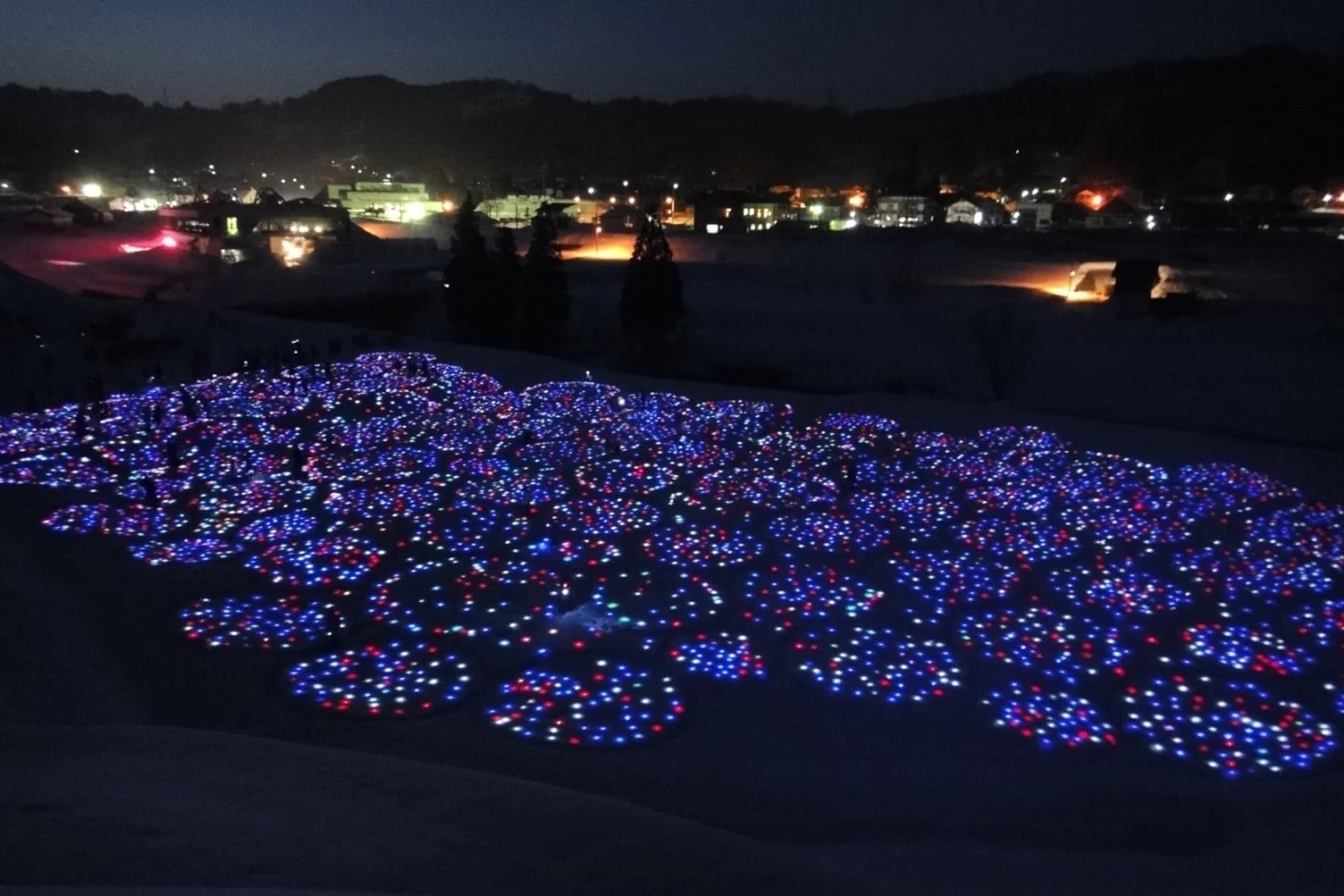
에치고 츠마리 아트 트리엔날레 출품작
교타 타카하시, 얼어붙은 마을을 위한 선물 © 오사무 나카무라 |
|
|
일본 니가타현의 <대지의 예술제(Echigo-Tsumari Art Triennale)>는 2000년 인구 소멸 위기의 산간 농촌에서, 미술관을 짓는 대신 폐가와 휴경지 논을 무대로 주민과 예술가가 함께 작품을 만드는 구조로 출발해 지금은 상시적으로 관람객들이 찾아오는 국제적 예술 관광지가 되었다.
노르웨이의 <베르겐 아셈블리(Bergen Assembly)>는 아예 “비엔날레를 할 것인가 말 것인가”를 스스로 묻고 답한 끝에, 고정된 형식을 거부하고 매회 초청된 ‘기획자(Artistic Director)’가 행사 형식 자체를 새로 설계하는 실험적 모델을 택했다.
이들은 정해진 전시장도, 고정된 개막·폐막식도 없이 한 해 내내 연구와 세미나, 퍼포먼스가 이어지다가 가을에 절정을 이룬다. 일본 이시카와현 노토반도 끝 스즈시에서 3년마다 열리는 국제 동시대미술제 <오쿠노토 국제예술제(Oku Noto Triennale)>는 인구 1만 명이 소멸위기의 자치단체였다. 그러나 지역의 어촌 문화와 전통 의례, 빈집과 빈 상점을 무대로 예술제를 열었다. 여기서 트리엔날레란 명칭은 행사명이 아니라, 지역과 예술이 관계 맺는 지속적 플랫폼의 이름이 되었다. 이상의 예술제들은 모두 규모나 예산은 소박하지만, 핵심은 ‘예술이 지역 주민의 삶과 결합’한 점, 그리고 이벤트가 아니라 지역이 실제로 마주한 질문 하나를 예리하게 잡아내, 한정된 행사 기간이 아니라, 행사를 준비하는 기간 내내 지속되는 구조로 트리엔날레를 설계했다는 공통점이 있다.
세종시가 지금 필요로 하는 것은 또 하나의 축제가 아니라, 도시가 도시에 스스로 던지는 질문이 되어야 한다. 질문을 잘 고른다면 예술제는 도시의 문화적 정체성을 매 회차 갱신해 가는 살아있는 담론의 생산기지가 될 것이다. 반대로 질문 없이 형식만 빌려온다면, 세종은 이미 포화 상태에 이른 국내 비엔날레에 또 하나를 더할 뿐이다.
지속가능한 성장이란 결국 도시가 스스로에 대해 계속 질문할 수 있는 능력에서 나온다. 유산이 없는 도시, 아직 “완성되지 않은 도시”라는 세종의 조건은 약점이 아니라, 오히려 그 질문을 가장 정직하게 던질 수 있는 자격이다. 따라서 세종시는 우선 세종만이 던질 수 있는 질문을 찾아야 한다. 세종대왕도 한글도 좋지만 ‘균형발전’, ‘행정과 시민의 삶’, ‘계획도시의 우연성’ 같은, 다른 지자체가 자기 것이라 주장할 수 없는 “유일한 하나(One & Only)”를 의제로 삼아야 한다. 다음 도시 자체를 전시장으로 삼아야 한다. 정부청사, 금강 수변공간, 신도시의 공터, 마을의 빈 집처럼 세종이라는 도시의 조직을 무대로 써야 예산도 아끼고 ‘세종에서만 가능한 전시’라는 정체성도 만들 수 있다. 그리고 격년이나 3년 마다가 아닌 상시적인 구조로 예술제를 설계할 필요가 있다. 연중 이어지는 리서치(Research)와 커뮤니티 프로그램 없이는 다음 회차를 지탱할 담론도 쌓이지 않기 때문이다.
결론적으로 세종시에 필요한 것은 또 하나의 축제도, 세종대왕이나 한글 같은 콘텐츠가 아니라 오늘날의 도시가 지닌 문제에 대해 스스로에게 던지는 질문의 형식이라야 한다. 유산이 없는 도시, 아직 “완성되지 않은 도시”라는 세종의 조건은 약점이 아니라, 그 질문을 가장 정직하게 던질 수 있는 자격이자 자산이다. |
|
|
한글에 대한 세 가지 시선,
2026 한글문화특별기획전 1·2·3
글. 한글문화도시사업팀장 최윤정
2026년 한글날 100주년을 맞이하는 해로, 이를 기념해 세종시문화관광재단은 한글과 ‘지역 예술의 발견’, ‘동시대 기술과의 조합’, ‘창조적 혁신의 정신’을 키워드로 세 개의 전시를 마련했다.
단순히 한글의 형태나 역사를 보여주는 전시에 머무르지 않고 본질적인 한글 창제의 정신에 주목하여 세 가지 방향성을 제시하였으며 이를 통해 한글문화의 영역을 넓혀보려는 시도이다. |
|
|
|
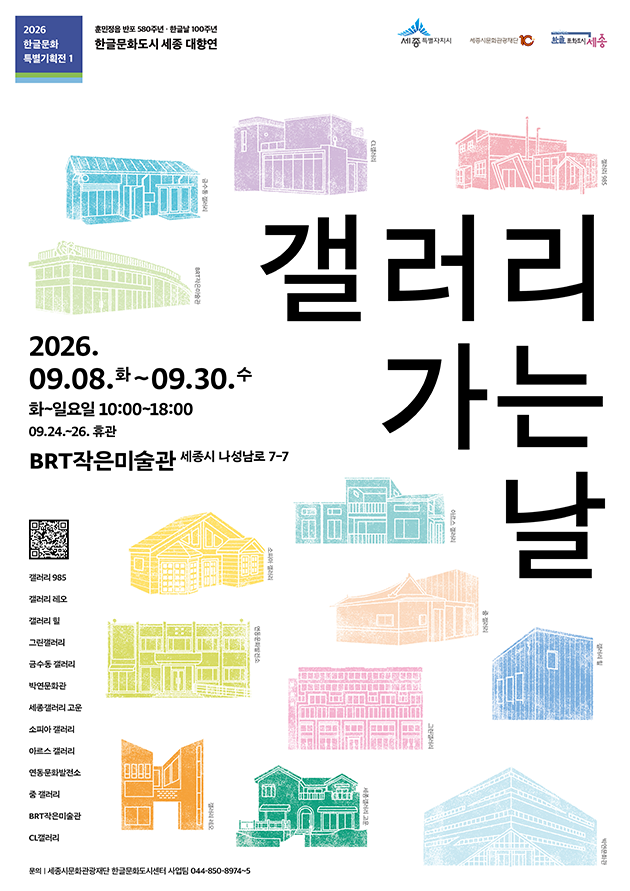
일시 : 2026. 9. 8.(화) ~ 9. 30.(수)
※ 화~일 10:00~18:00, 추석연휴 휴관(9. 24. ~ 9. 26.)
장소 : BRT작은미술관(세종시 나성남로 7-7)
참여갤러리 : 11곳
갤러리 985, 갤러리 레오, 갤러리 힐, 그린갤러리, 금수동 갤러리, 세종갤러리 고운,
소피아 갤러리, 아르스 갤러리, 연동문화발전소, 줌 갤러리, CL갤러리 |
|
|
우리의 언어와 현실에 맞는 독자적 문자 체계를 만든 것이 한글이다. 이는 우리에게 필요한 것을 스스로 발견하고, 우리의 방식으로 새로운 가치를 만들어낸 ‘자주성’인 것이다. 《갤러리 가는 날》은 이러한 정신을 오늘의 지역문화에 비춰보는 것에서 출발한 전시이다. 지역 문화자원을 소개하는 것에 그치지 않고, 우리가 살아가는 지역 안에서 무엇을 발견하고 어떤 문화적 가치를 만들어갈 수 있는지 살펴보고자 한다.
세종에도 다양한 성격의 갤러리와 작가들이 활동하고 있지만 시민들이 이를 일상에서 접하기는 쉽지 않다. 이번 전시는 이러한 지역의 문화적 자원을 하나의 흐름으로 연결하고 시민에게 소개함으로써 세종시만의 예술적 자원을 발견하는 계기를 마련한다.
BRT작은미술관을 거점으로 세종시 11개 갤러리의 대표작을 한자리에서 소개하고, 각 갤러리에서는 공간의 특성을 살린 기획전과 시민참여 프로그램을 운영한다. 하나의 전시장에 머무르지 않고 도시 곳곳의 갤러리를 찾아가는 과정 자체가 지역의 예술과 새로운 관계를 맺는 경험이 되도록 구성했다. |
|
|
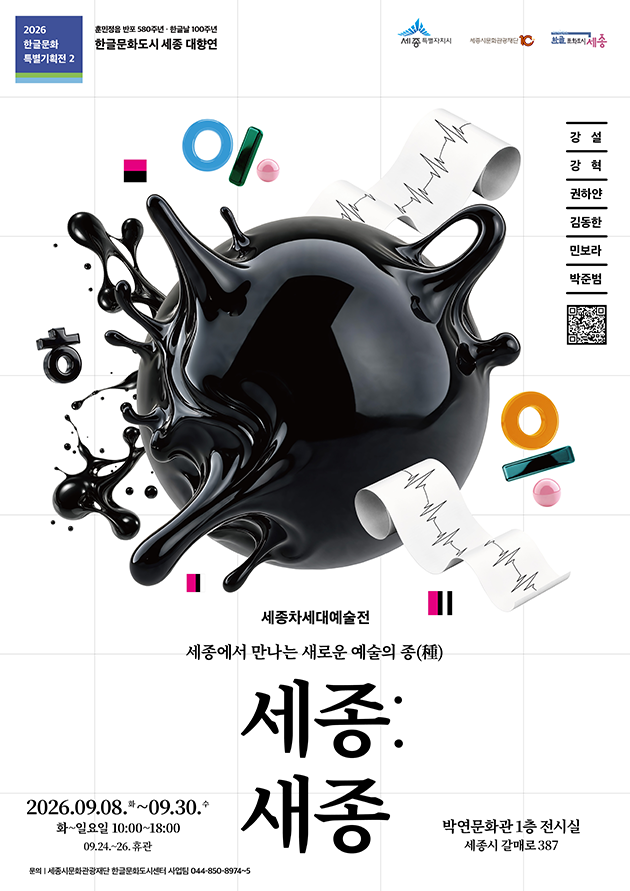
일시 : 2026. 9. 8.(화) ~ 9. 30.(수)
※ 화~일 10:00~18:00, 추석연휴 휴관(9. 24. ~ 9. 26.)
장소 : 박연문화관 전시실(세종시 갈매로 387)
참여작가 : 강설, 강혁, 권하얀, 김동한, 민보라, 박준범 |
|
|
《세종:새종》은 한글의 조합, 확장성에서 출발했다. 자음과 모음의 조합으로 무수한 글자를 만들어 내는 한글의 구조처럼, 서로 다른 매체와 기술이 결합할 때 새로운 예술적 표현이 만들어질 수 있다는 가능성에 주목했다.
세종시에서 활동하는 지역 예술인들이 디지털, AI, 영상, 인터렉티브 등 신기술을 활용해 한글과 세종이라는 주제를 각자의 방식으로 해체하고 조합하여 확장했다. 한글의 형태를 그대로 재현하는 데 그치지 않고, 기술과 예술의 결합을 통해 한글이 가진 의미를 새로운 방식으로 선보인다.
특히 이번 전시에서는 다른 언어를 사용하는 존재가 만나는 상황에서 ‘우리는 어떻게 서로를 이해하고 소통하는가’라는 질문을 던지는 작품들을 주목할 만하다. 박준범 작가는 서로 다른 모국어를 사용하는 외국인 간의 퍼즐 풀이 형식의 퍼포먼스를 통해 언어의 차이와 소통의 과정을 기록하고, 김동한 작가는 두 개의 생성형 AI 간의 대화에 관람객이 직접 개입하도록 하여 변화하는 대화의 과정을 보여준다.
《세종:새종》은 한글을 완성된 하나의 결과물이 아닌, 새로운 조합과 해석을 통해 계속 확장되는 문화적 자원으로 바라본다. 지역 예술인과 신기술의 만남을 통해 한글이 오늘의 예술에서 어떤 모습으로 해석되는지 살펴볼 수 있다. |
|
|
일시 : 2026. 10. 9.(금) ~ 11. 8.(일) 10:00 ~ 18:00
※ 월요일 휴관
장소 : 한글비엔날레 전시관(세종시 중앙공원로 60)
전시해설 : 14시, 16시(현장참여) |
|
|
세종대왕과 백남준, 서로 다른 시대와 분야에서 활동한 두 사람은 기존의 방식에 머무르지 않고 새로운 길을 개척했다는 점에서 닮아있다. 세종대왕은 당시의 문자 체계로는 담아내기 어려웠던 우리말을 위한 새로운 문자를 만들었고, 백남준은 텔레비전과 비디오라는 새로운 기술을 예술의 영역으로 끌어들였다. 두 사람의 창조는 모두 시대의 한계를 넘어 새로운 방식을 제시했다는 점에서 의미가 있다.
《세종과 남준》은 이러한 공통점에 주목해 두 인물의 창조적 혁신을 하나의 전시 안에서 마주하게 한다. 세종대왕의 한글 창제 업적을 연대기 순으로 서술하거나, 백남준의 작품을 시대순으로 나열하는 것에 그치지 않고, 새로운 문화적 형식으로 발전한 과정을 면밀하게 살펴보고자 한다.
두 인물에게서 발견된 ‘창조적 태도’는 익숙한 질서와 형식에 머무르기보다 새로운 가능성을 발견하고 이를 자신의 방식으로 구현했다는 점이다. 이러한 태도는 오늘날에도 변화하는 기술과 문화 속에서 예술이 어떤 역할을 할 수 있는지 생각하게 한다. |
|
|
《세종:새종》 참여 작가의 시선이 담긴 작품과 그 여운을 깊이 있게 담아낸 음악을 함께 전해드립니다. 이어폰 너머로 들려오는 소리에 몸을 맡긴 채, 전시관을 거닐며 작가가 건네는 이야기가 한층 더 가깝게 다가오는 순간을 만나보세요. |
|
|
강설 | 말이 글이 되는 동안
강설은 영상과 사운드, 디지털 기술을 매개로 언어와 개인의 경험이 맺는 관계를 탐구한다. 모두가 공유하는 언어 역시 각자의 기억과 감각, 경험을 통과하며 서로 다른 의미를 갖게 된다는 점에 주목하고, 보편적인 언어 체계 안에서 고유한 ‘개인어’가 형성되는 과정을 들여다본다.
이번 전시에서 선보이는 〈말이 글이 되는 동안〉은 한글을 한 시대의 소리와 경험을 기록하는 ‘레코드판’으로 바라본다. 대한민국이 수립되기 이전의 오래된 영상 기록에서 출발해, 시대를 지나며 축적되어 온 언어와 개인의 경험을 시청각적으로 풀어낼 예정이다. 같은 언어를 공유하는 우리는 과연 같은 의미를 말하고 있을까.
추천 음악
George Harrison <Electronic Sound, 1969>의
수록곡 'Under the Mersey Wall'
비틀즈의 멤버 조지 헤리슨이 Moog의 악기를 활용해 즉흥 연주하여 녹음한 곡입니다. 엄청난 혹평을 받은 실험적인 솔로 앨범인데, 직접 들어보시면 그 이유를 단번에 아실 수 있을 겁니다. 하지만, 이 대담한 시도가 결국 <Abbey 1969 Road,>라는 위대한 레코드로 이어진 걸 생각하면, 필요한 시도처럼 보입니다.
제 시도들도 그러길 바라며!
|
|
|
강혁 | 웃음은 색으로 읽을 수 있을까?
강혁은 2006년부터 ‘읽을 수 있는 그림 Readable Painting’을 통해 한글의 자음과 모음을 색과 기하학적 구조로 변환해 왔다. 글자를 직접 쓰는 대신 색과 위치, 비례와 구조로 치환하며 언어와 이미지의 관계를 탐구하고, 최근에는 사운드와 생성형 AI, 이미지 인식 기술 등을 더하며 작업의 범위를 확장하고 있다.
이번 작업은 디지털 환경에서 ‘ㅎㅎ’이라는 하나의 기호로 압축되는 웃음과 현실의 웃음 사이의 간극에 주목한다. 현실의 웃음은 사람과 세대, 순간에 따라 서로 다른 감정과 목소리를 품는다. 강혁은 이러한 웃음의 다양한 층위를 한글과 색, 소리로 풀어내며, 하나의 기호 뒤에 존재하는 서로 다른 감정과 표현을 들여다본다.
추천 음악
Bobby McFerrin – Don't Worry, Be Happy
인간의 목소리가 음악이 되듯, 웃음소리가 한글을 거쳐 색과 형태의 회화가 된다는 점에서 제 작업과 닮아 있는 곡입니다.
|
|
|
권하얀 | 아우어
권하얀은 빛과 그림자, 문자와 이미지 등을 통해 익숙한 대상의 이면에 축적된 시간과 기억, 흔적을 탐색해 왔다. 최근에는 한글의 조형성에 주목하며 하나의 형태가 다른 이미지로 전환되는 순간으로 관심을 확장하고 있다.
《세종:새종》 전시에서는 한글의 형태와 시간의 관계를 탐색하는 신작을 선보인다. ‘아, 우, 어’. 세 글자를 가만히 들여다보면 서로 다른 글자 사이에 반복되는 단순한 조형 요소가 눈에 들어온다. 익숙한 문자를 이루는 형태와 시간의 흐름이 어떻게 하나의 이미지로 이어질지, 《세종:새종》에서 그 새로운 변화를 예고한다.
추천 음악
Max Richter – on the nature of daylight
이 음악은 영화 컨택트의 음악으로도 널리 알려져 있는데요, 미지의 대상과 조우하는 영화의 분위기를 담아내어, 듣는 이에게 익숙한 세계를 조금 다르게 느낄 수 있게 해주는 순간을 경험하게 합니다.
|
|
|
|
김동한은 감각과 감정이 다른 존재에게 온전히 전달될 수 있는지 질문하며, 사운드와 빛, 공간, 코드와 오브제를 넘나드는 ‘감각 간 번역’을 시도해 왔다. 이 과정에서 발생하는 오역과 불일치, 어긋남은 제거해야 할 오류가 아니라 새로운 감각과 관계가 발생하는 가능성이 된다.
신작 〈못받아쓰기〉는 이러한 질문을 두 인공지능의 대화로 옮겨놓는다. 두 인공지능은 가장 효율적인 기계의 언어 대신 인간처럼 말하고 듣고 읽고 쓰며 서로에게 다가간다. 그 사이에 인간의 목소리까지 스며들 때, 과연 무엇이 온전히 전달되고 무엇이 달라질까. 기계의 대화를 통해 정보의 전달만으로는 설명되지 않는 인간의 소통과 그 안에서 끝내 ‘받아쓰지 못하는 것들’이 무엇인지 질문한다.
추천 음악
Birth - Holly Herndon
목소리를 기반으로 훈련된 인공신경망 Spawn이 인간의 음성·언어를 재구성해 만든, AI의 첫 발화 또는 출현을 주제로 한 음악입니다. 인공지능을 활용한 이번 작품과 잘 어울릴 것 같습니다.
|
|
|
|
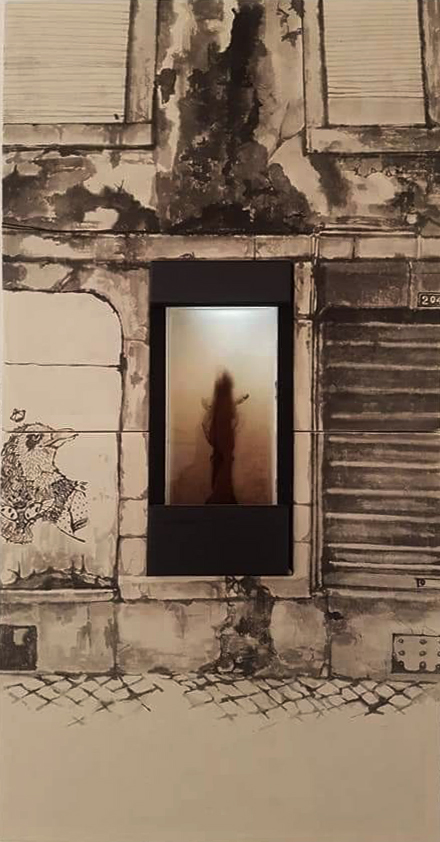
민보라는 수묵의 전통적 감각에 빛과 움직임을 개입시키며, 익숙한 회화의 풍경을 낯선 장면으로 전환한다. 먹과 순지, LED를 비롯해 최근에는 자기장에 반응하며 끊임없이 형태를 바꾸는 자성유체를 새로운 물성으로 끌어들이며 회화의 경계를 확장하고 있다.
고요한 수묵의 풍경에 움직이는 물성이 더해진다면, 우리는 그것을 어떻게 바라보게 될까. 이번 《세종:새종》에서는 세종의 장소를 담아낸 수묵과 빛, 유동하는 자성유체가 한 공간에서 교차한다. 정지와 움직임, 전통적 재료와 동시대의 기술이 맞닿는 지점에서 수묵이 가질 수 있는 또 다른 감각을 탐색한다.
추천 음악
Ricardo Januário - Feelin good
작품 '삶과 같이' 와 함께 재생하는 음악입니다. 작품 '삶과 같이'는 포르투갈 리스본 여행 시 받은 영감으로 작업한 작품이며, 여행 당시 길거리 음악을 들었고, 그 음악가cd를 구매했습니다. 과거와 현재가 공존한 시간을 살아가는 느낌을 받게 해준 리스본은 작품 속에 시간을 시각화하고자 하는 제 작품의 틀을 잡게 해주었습니다. 당시 길거리에서 들었던 음악이 영감받게 해준 그 시간으로 데려다주는 느낌이 들어 이 음악을 추천합니다.
|
|
|
|
박준범은 비디오와 퍼포먼스를 통해 개인이 주어진 구조와 조건 안에서 어떻게 행동하고 관계를 형성하는지 관찰해 왔다. 서로 다른 시점과 습관, 신념을 지닌 사람들이 하나의 상황을 공유할 때 발생하는 선택과 갈등, 관계의 변화를 담아낸다.
이번 전시에서는 ‘서로 다른 언어를 사용하는 사람들은 어떻게 서로를 이해할 수 있는가’라는 질문을 던진다. 〈8개의 언어〉는 서로 다른 모국어를 사용하는 여덟 사람을 하나의 공동 과제 앞에 놓고, 공통의 언어가 부재한 상황에서 관계가 형성되는 과정을 포착한다. 말이 통하지 않을 때, 우리는 무엇으로 서로를 이해하게 될까. 언어의 차이가 만들어낸 틈에서 여덟 사람이 서로를 이해하고 관계를 만들어가는 과정을 따라가며, 우리가 당연하게 여겨온 소통의 조건을 다시 바라보게 한다.
추천 음악
Nirvana - Something in the way
|
|
|
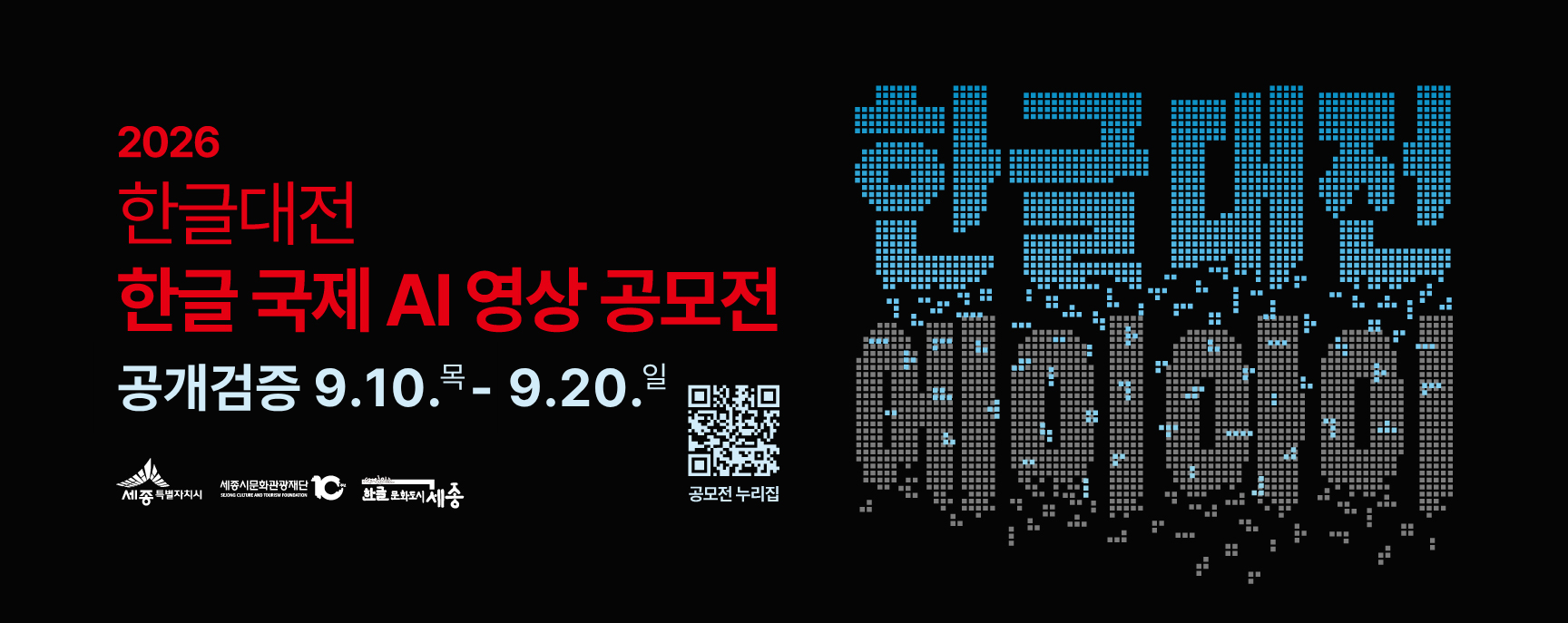
2026 한글대전 「한글 국제 AI 영상 공모전」 공개검증
2026. 9. 10.(목) - 9. 20.(일)
공모전 누리집 예비 선정작을 미리 만나보고, 여러분의 의견을 들려주세요! |
|
|
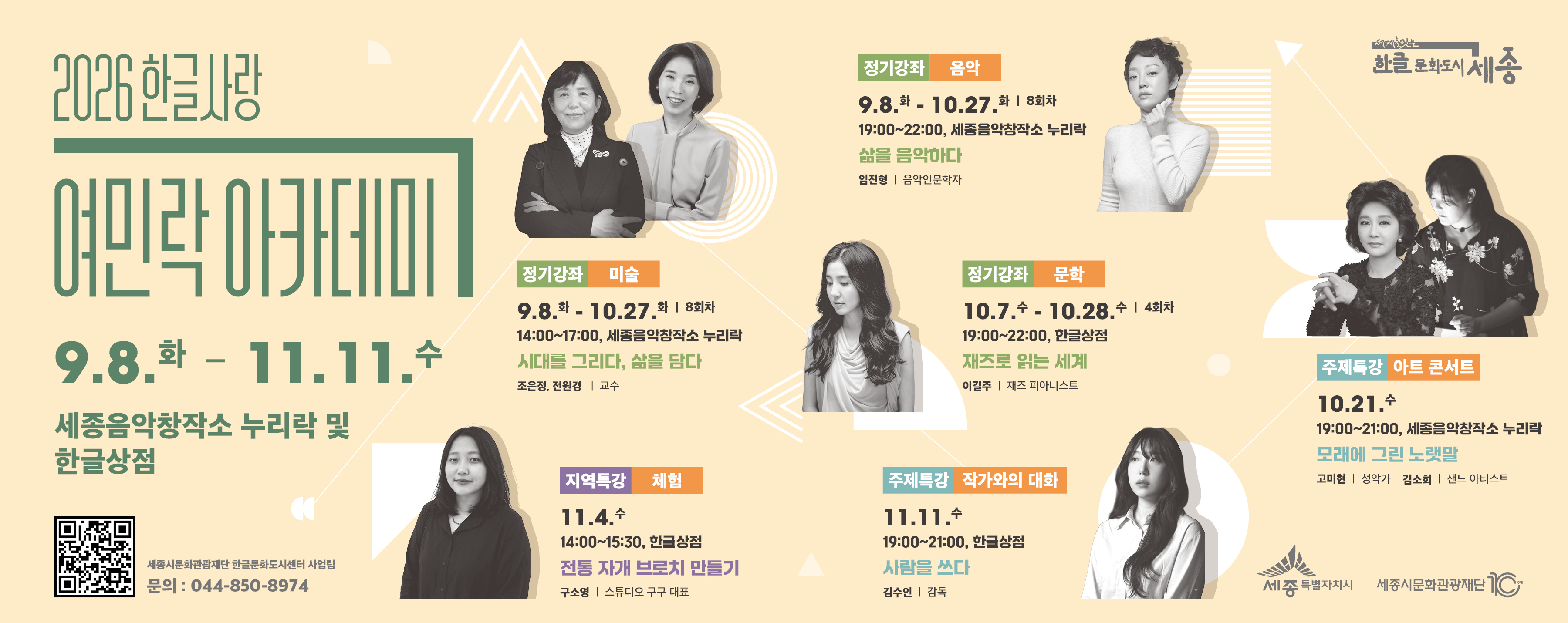
2026 한글사랑 여민락 아카데미 수강생 모집 일정 안내
음악, 미술 : 8.18.(화) ~ 9.6.(일) / 문학 8.18.(화) ~ 10. 5.(월) |
|
|
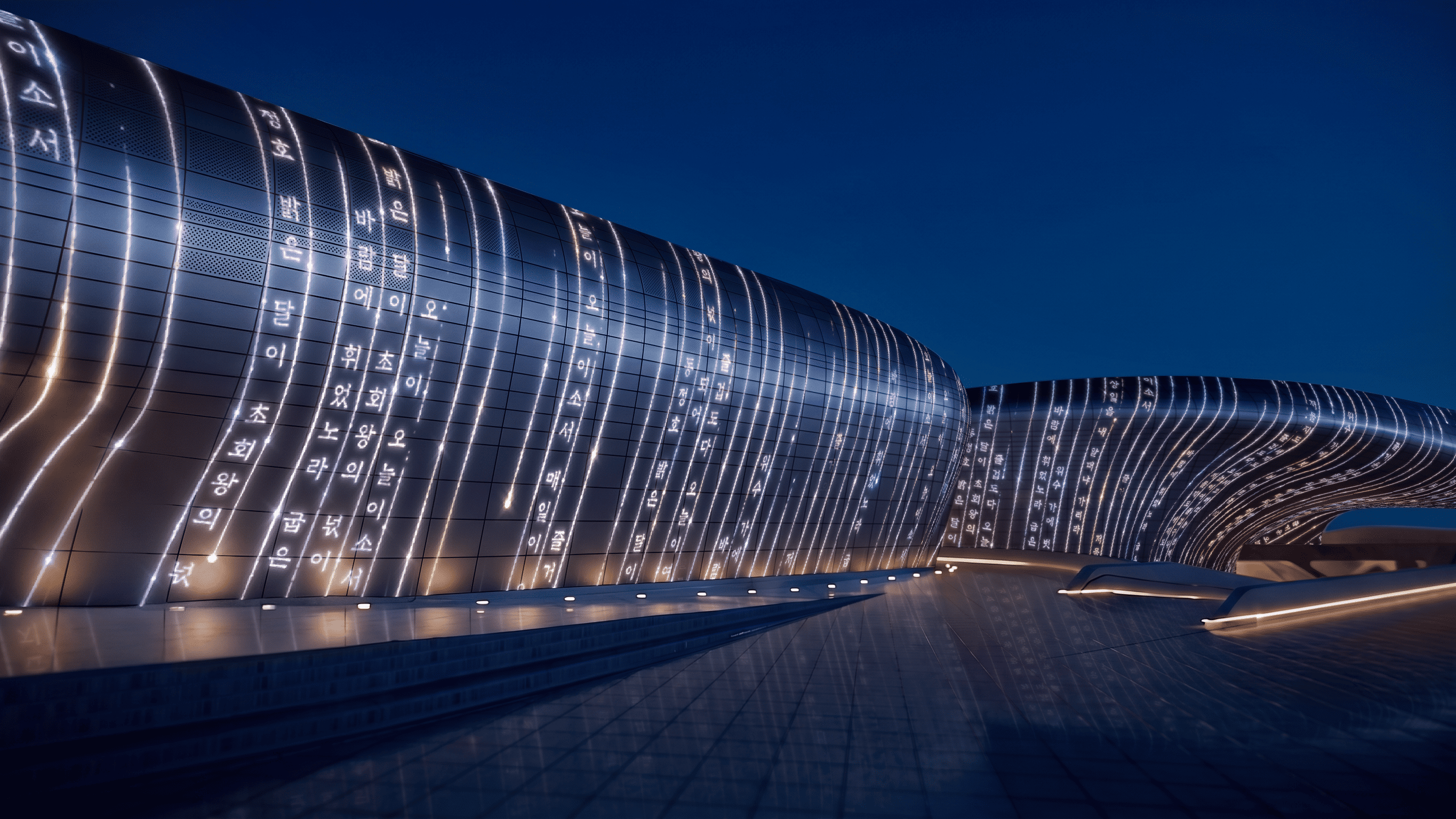
빛으로 깨어난 우리나라의 노래,
청구영언 DDP 서울라이트 ‘말이 빛나는 밤’
2026. 9. 3.(목) - 9. 13.(일) / DDP 전면 222m 미디어파사드
잠들어 있던 청구영언의 노래가 빛으로 깨어나, 오늘의 서울과 만나는 특별한 밤을 선사합니다. |
|
|
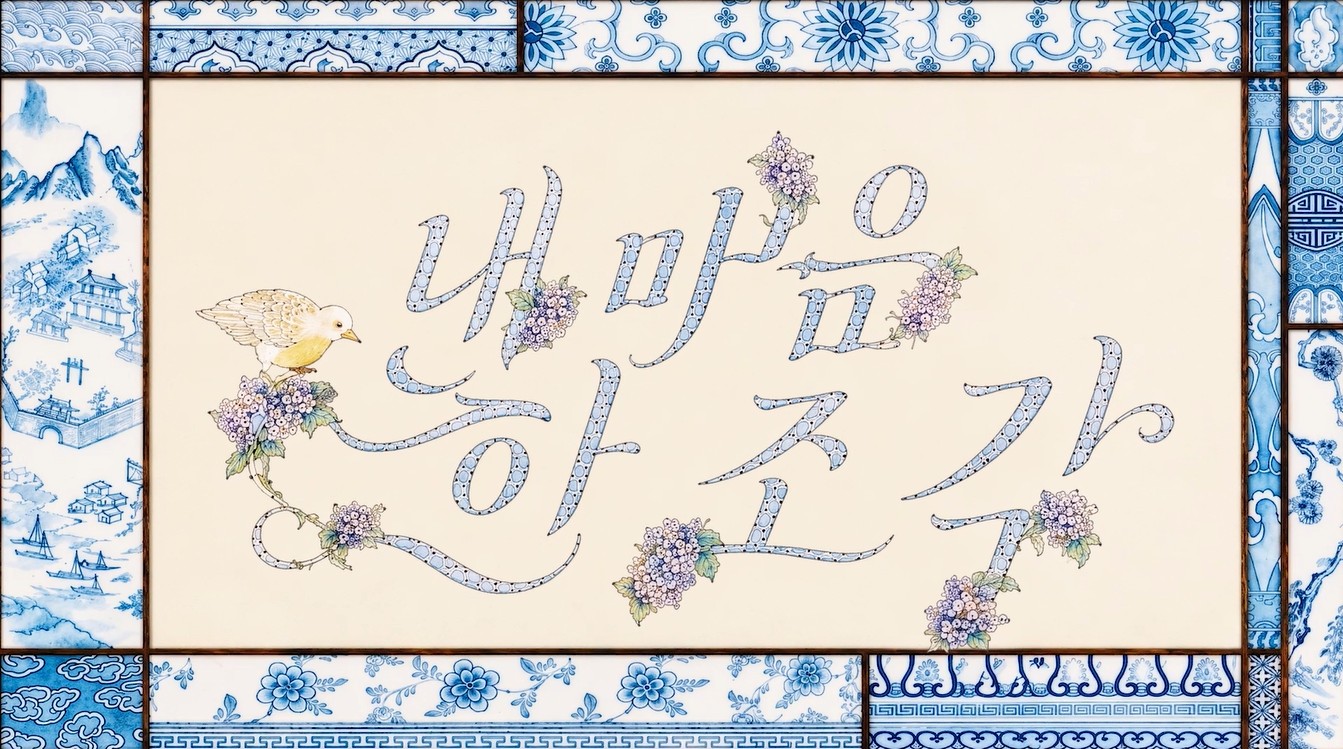
청구영언, K-POP으로 다시 살아나다 내 마음 한 조각
음원&뮤직비디오 공개 / 앳하트
300년 전 시조의 마음을 오늘의 음악으로 |
|
|
한글놀이터 세종관 방문객 4만명 돌파! 성원에 감사드립니다!
* 화~일요일 10:00-18:00 상시 운영(월요일 휴무)
세종특별자치시 조치원읍 문예회관길 22 |
|
|
Why a Biennale in Sejong Now? — How to Leverage the Asset of ‘Deficit’
Chung Joonmo (Museum Studies, Curator, Former Chief Curator at the National Museum of Modern and Contemporary Art, Korea, 1996–2006)
There is hardly any local government in South Korea without its own festival, and in that vein, over thirty events bearing the name “biennale” have mushroomed across the country. Yet, almost nowhere can one find a clear answer to the question, “Why a biennale?” If the city of Sejong is to prepare an art festival, the first question it must answer is not “What will we show?” but rather “Why must it be an art festival (biennale) rather than a general festival?” Domestic biennales suffer from a chronic identity crisis: they fail to fully satisfy either the administrative goal of regional promotion and tourism revenue expansion, or the artistic goal of producing contemporary art discourse. This is a path Sejong must desperately avoid.
In truth, Sejong is a city devoid of history, accumulated cultural heritage, old downtown alleyways, or long-standing artist communities. Yet the city has gone about forging its identity in exactly the opposite way. It has been a method of forcefully grafting symbols—specifically “King Sejong” and Hangeul (the Korean alphabet), which have no actual geographical or historical ties to the locality—into every corner of the city. This reflexive habit of putting forward King Sejong and Hangeul as the city’s identity simply because its name is “Sejong” is no different from the approach regional biennales across Korea have taken, fruitlessly manufacturing non-existent narratives under the guise of storytelling.
Paradoxically, Sejong’s true asset lies in this very “deficit.” Sejong is South Korea’s only planned city and administrative capital, a product of the political project for balanced national development, and a city still under construction. Rather than a borrowed tradition, “contemporary art in its own right”—that is, the “Now & Here of Sejong City”—must become its substance. As a city without heritage, it may actually be the most optimized location for an art festival that wins on the power of concept alone.
Japan’s Echigo-Tsumari Art Triennale, launched in 2000 in a mountainous rural area facing depopulation, chose not to build a museum. Instead, using abandoned houses and fallow rice paddies as stages where local residents and artists create works together, it has evolved into an international art tourism destination that visitors frequent year-round. Norway’s Bergen Assembly famously asked itself whether or not a biennale should even be held; rejecting fixed formats, it adopted an experimental model where each invited Artistic Director redesigns the format of the event from scratch. With no fixed exhibition venue and no fixed opening or closing ceremonies, research, seminars, and performances unfold throughout the year, culminating in autumn. The Oku-Noto International Art Festival, held every three years in Suzu at the tip of Japan's Ishikawa Prefecture’s Noto Peninsula, took place in a municipality of just 10,000 people facing extinction. Yet, it launched an art festival staging local fishing village culture, traditional rituals, vacant houses, and empty storefronts. Here, the term “triennale” ceased to be merely an event title and became a continuous platform where the region and art engage with one another. All of these art festivals share a common trait. Though modest in scale and budget, their core lies in the fact that "art is integrated with the lives of local residents." Rather than existing as one-off events, they were structured as a continuous process that ran throughout the preparation period, not just during the brief event window—one that sharply captured a single question genuinely confronted by the region.
What Sejong needs right now is not yet another festival, but an inquiry that the city poses to itself. If the right question is chosen, the art festival will become a living incubator of discourse that refreshes the city's cultural identity with every edition. Conversely, if it borrows only the format without the question, Sejong will simply add one more to an already saturated landscape of domestic biennales.
Sustainable growth ultimately stems from a city's capacity to continuously question itself. Sejong’s condition as a city without heritage—an “unfinished city”—is not a weakness, but rather the qualification to pose that question most honestly. Therefore, Sejong must first discover the questions that only Sejong can ask. King Sejong and Hangeul are fine, but agendas that other local governments cannot claim as their own—such as “balanced development,” “administration and citizens' lives,” and “the contingency of a planned city”—must become the core issues, representing a “One & Only” identity. Next, the city itself must become the exhibition space, using its organizational infrastructure as a stage—the Government Complex, the Geumgang waterfront, vacant lots in the new town, empty houses in local villages—to save budget while establishing the identity of "an exhibition possible only in Sejong." Furthermore, the art festival needs to be structured on an ongoing, year-round basis rather than every two or three years. Without research and community programs running continuously through the year, the discourse required to sustain the next edition cannot accumulate.
In conclusion, what Sejong needs is neither another festival nor content like King Sejong or Hangeul, but the form of a question posed to itself regarding the problems confronting today's urban society. Sejong’s condition as a city without heritage, an “unfinished city,” is not a weakness, but the very qualification and asset with which to pose that question most honestly. |
|
|
Three Perspectives on hangeul,
2026 Special Exhibition on hangeul Culture 1, 2, and 3
Choi Yoonjeong, Team Manager of the hangeul Culture City Promotion Team
Marking the 100th anniversary of hangeul Day in 2026, the Sejong Culture and Tourism Foundation(SJCT) has organized three exhibitions under the keywords of hangeul, the "discovery of local art," the "combination with contemporary technology," and the "spirit of creative innovation.“
Rather than stopping at exhibitions that merely showcase the form or history of hangeul, these exhibitions focus on the essential spirit of its creation, presenting three directions for expanding the horizons of hangeul culture.
Discovery of Local Art: A Visit to the Gallery
Hangeul was created as an independent writing system tailored to our language and reality. This represents "autonomy"—discovering what we need on our own and creating new value in our own way. A Visit to the Gallery is an exhibition that originates from reflecting this spirit onto today's local culture. It goes beyond simply introducing local cultural resources, examining what we can discover and what cultural values we can build within the local community where we live.
While Sejong hosts galleries and artists of various characters, it is not easy for citizens to encounter them in their daily lives. By connecting these local cultural resources into a single flow and introducing them to the public, this exhibition creates an opportunity to discover Sejong’s unique artistic assets.
Centered around the BRT Small Art Museum, the exhibition introduces representative works from 11 galleries in Sejong in one place, while each gallery operates curated exhibitions and citizen-participation programs tailored to its spatial characteristics. Rather than remaining in a single exhibition hall, the process of visiting galleries across the city is designed to become an experience of forging a new relationship with local art.
Combination with Contemporary Technology: Sejong: Saejong — New Species at Sejong
Sejong: Saejong — New Species at Sejong originates from the combination and expansiveness of hangeul. Much like the structure of hangeul, where countless letters are created through the combination of consonants and vowels, the exhibition focuses on the possibility that new artistic expressions can emerge when different media and technologies combine.
Local artists active in Sejong have utilized new technologies such as digital tools, AI, video, and interactivity to deconstruct, combine, and expand the themes of hangeul and Sejong in their own ways. Going beyond simply reproducing the form of hangeul, the exhibition presents the meanings inherent in hangeul in novel ways through the convergence of technology and art.
Notably, works that raise the question "How do we understand and communicate with one another when beings of different languages meet?" deserve special attention in this exhibition. Artist Park Junbeom records the process of linguistic differences and communication through a puzzle-solving performance between foreigners who speak different native languages. Meanwhile, artist Kim Dong-han invites viewers to directly intervene in a conversation between two generative AIs, demonstrating the evolving dynamics of dialogue.
Sejong: Saejong — New Species at Sejong views hangeul not as a completed, singular outcome, but as a cultural resource that continues to expand through new combinations and interpretations. Through the encounter between local artists and new technologies, visitors can explore how hangeul is interpreted in contemporary art today.
The Spirit of Creative Innovation: King Sejong and Nam June Paik
King Sejong and Nam June Paik, active in different eras and fields, share a likeness in that they did not rest within conventional methods and instead pioneered new paths. King Sejong created a new alphabet for the Korean language, which was difficult to capture with the writing systems of the time, while Nam June Paik brought new technologies like television and video into the realm of art. The creations of both figures are meaningful in that they transcended the limitations of their respective eras to propose new approaches.
King Sejong and Nam June Paik focuses on this commonality, bringing the creative innovations of both figures face-to-face within a single exhibition. Rather than merely recounting King Sejong’s achievements in creating hangeul in chronological order or listing Nam June Paik’s works sequentially, the exhibition closely examines the process by which these innovations evolved into new cultural forms.
The "creative attitude" discovered in both figures lies in the fact that, rather than remaining anchored in familiar orders and formats, they discovered new possibilities and embodied them in their own ways. This attitude prompts us to reflect on what role art can play today amidst changing technologies and cultures.
|
|
|
We present works infused with the artistic vision of the artists participating in Sejong: Saejong — New Species at Sejong, paired with music that deeply captures the resonance they leave behind. Allow yourself to be carried away by the sounds flowing through your earphones as you stroll through the exhibition hall, and experience a moment when the stories shared by the artists feel closer than ever. |
|
|
Kang Seol | ATC (Audio_to_Text_Convert)
Kang Seol explores the relationship between language and individual experience through video, sound, and digital technology. Focusing on how even a universally shared language acquires different meanings as it passes through each person's memories, senses, and experiences, the artist examines the process by which a unique "idiolect" is formed within a universal linguistic system.
On view in this exhibition, ATC (Audio_to_Text_Convert) treats hangeul as a "record" that captures the sounds and experiences of an era. Starting from old archival footage from before the establishment of the Republic of Korea, the work will unpacks the language and individual experiences that have accumulated over time. Do we, who share the same language, truly mean the same meaning?
Playlist.
George Harrison <Electronic Sound>
'Under the Mersey Wall'
This track was improvised and recorded by The Beatles' George Harrison on a Moog synthesizer. It's an experimental solo album that received scathing reviews, and you'll instantly understand why the moment you listen to it. However, considering how this bold attempt ultimately led to the great record Abbey Road, it feels like a necessary experiment.
Hoping my own attempts turn out the same!
|
|
|
Kang Hyuk | Can Laughter Be Read in Color?
Since 2006, Kang Hyuk has transformed the consonants and vowels of hangeul into color and geometric structures through Readable Painting. Rather than writing letters directly, the artist explores the relationship between language and image by substituting letters with color, position, proportion, and structure. Recently, the scope of the work has expanded by incorporating sound, generative AI, and image recognition technology.
This new work focuses on the gap between real laughter and laughter compressed into a single symbol, "ㅎㅎ" (hh), in the digital environment. Real laughter encompasses different emotions and voices depending on the person, generation, and moment. Kang Hyuk unpacks these various layers of laughter through hangeul, color, and sound, examining the diverse emotions and expressions that exist behind a single sign.
Playlist.
Bobby McFerrin – Don't Worry, Be Happy
Just as the human voice becomes music, this song resembles my own work — the sound of laughter passing through hangeul to become a painting of color and form.
|
|
|
Kwon Hayan | Hour
Kwon Hayan has explored the time, memories, and traces accumulated beneath the surface of familiar objects through light, shadow, text, and image. Recently, the artist has focused on the formative qualities of hangeul, expanding their interest to the moment when a single form transitions into another image.
In the Sejong: Saejong — New Species at Sejong exhibition, Kwon presents a new work exploring the relationship between the form and time of hangeul. Taking a quiet look at the three letters "아, 우, 어" (a, u, eo), one notices simple, repeating formative elements shared among distinct characters. How the forms and the passage of time constituting familiar letters will connect into a single image is heralded through this new transformation in Sejong: Saejong — New Species at Sejong.
Playlist.
Max Richter – on the nature of daylight
This music is widely known from the film Arrival. Capturing the film's atmosphere of encountering the unknown, it offers listeners a moment to experience a familiar world in a slightly different way.
|
|
|
Kim Donghan | Misdictation
Kim Donghan has questioned whether senses and emotions can be fully communicated to another being, attempting a "cross-sensory translation" that moves freely across sound, light, space, code, and objects. The mistranslations, discrepancies, and mismatches that arise in this process are not errors to be eliminated, but rather possibilities for new senses and relationships to emerge.
The new work, Misdictation, translates this question into a dialogue between two artificial intelligences. Instead of using the most efficient machine language, the two AIs approach one another by speaking, listening, reading, and writing like humans. When even a human voice seeps into that space, what is truly conveyed and what changes? Through a conversation between machines, the work questions human communication—which cannot be fully explained by the mere transfer of information—and what ultimately remains as the "things that cannot be dictated."
Playlist.
Birth - Holly Herndon
This music is created by Spawn, an artificial neural network trained on human voices, reconstructing human speech and language around the theme of an AI's first utterance or emergence. It seems to pair wonderfully with this AI-utilized artwork.
|
|
|
Min Bora | 2023 Jongchinbu Gyeonggeundang and Okcheopdang
Min Bora intervenes in the traditional sensibilities of ink and wash painting with light and movement, transforming familiar painterly landscapes into unfamiliar scenes. Expanding the boundaries of traditional painting, the artist brings new materialities into play—ranging from ink, sunji (traditional mulberry paper), and LEDs, to magnetic fluids that constantly shift shape in response to magnetic fields.
When moving physicality is added to a serene ink-and-wash landscape, how will we perceive it? In this exhibition Sejong: Saejong — New Species at Sejong, ink and wash, along with light, capturing the places of Sejong, intersect with flowing magnetic fluid in a single space. At the intersection of stillness and motion, traditional materials and contemporary technology, the work explores the alternative sensory dimensions that ink and wash painting can hold.
Playlist.
Ricardo Januário - Feelin good
This is the music played alongside the artwork Like Life. The artwork Like Life was inspired by a trip to Lisbon, Portugal, during which I listened to street music and purchased a CD from the street musician.
Lisbon—making me feel as though I were living in a time where the past and present coexist—helped frame my work, which seeks to visualize time within art.
I recommend this music because it feels as though it transports me back to that moment of inspiration sparked by the street music I heard at the time.
|
|
|
Park Junebum | 8 Languages
Park June-bum has observed how individuals act and form relationships within given structures and conditions through video and performance. His work captures the choices, conflicts, and shifts in relationships that occur when people with different perspectives, habits, and beliefs share a single situation.
In this exhibition, the artist poses the question: "How can people who speak different languages understand one another?" 8 Languages places eight individuals who speak different native languages in front of a shared collaborative task, capturing the process by which relationships are formed in the absence of a common language. When words fail, what enables us to understand one another? Following the process by which these eight individuals understand each other and build relationships across the gaps created by linguistic differences, the work prompts us to reconsider the conditions of communication we so often take for granted.
Playlist.
Nirvana - Something in the way
|
|
|
2026 Hangeul Grand Competition
Hangeul International AI Video Contest Public Verification
Sep. 10 (Thu) – Sep. 20 (Sun), 2026 / Contest Website
Get an early look at the preliminary selected entries and share your feedback!
|
|
|
Recruitment Schedule for the 2026
Hangeul Sarang Yeominrak Academy
Music & Fine Arts : Aug. 18 (Tue) - Sep. 6 (Sun), 2026
Literature : Aug. 18 (Tue) - Oct. 5 (Mon), 2026 |
|
|
Korea’s Songs Awakened by Light: Cheonggu Yeongeon
DDP Seoul Light: Poetry – Starry Night
Sep. 3 (Thu) – Sep. 13 (Sun), 2026 / 222m DDP Media Facade
The slumbering songs of Cheonggu Yeongeon, a traditional Korean song collection, awaken through light, offering a special night where centuries-old melodies meet today’s Seoul. |
|
|
Cheonggu Yeongeon Revived as K-POP
Release of AtHeart’s A Piece of My Heart
Soundtrack & Music Video
The emotions of a 300-year-old sijo, a traditional Korean poem, are reimagined through today’s music |
|
|
Hangeul Playground Sejong Branch Surpasses 40,000 Visitors!
Thank you for your continued support
Opening Hours : Tuesday – Sunday, 10:00 AM – 6:00 PM Closed on Mondays
Address : 22, Munyehoegwan-gil, Jochiwon-eup, Sejong Special Self-Governing
City, Republic of Korea |
|
|
발행인 박영국
편집인 양유정
기획 임진아
편집 권예지
필진 정준모, 최윤정
진흥 김나현, 홍예원
디자인 ㈜웰리더메오
발행처 (재)세종시문화관광재단
세종특별자치시 갈매로 387
044-850-8952 www.sjcf.or.kr
Publisher Park Younggoog
Production Director Yang Yoojeong
Managed by Lim Jina
Editor Kwon Yeji
Contributor Chung Joonmo, Choi Yoonjeong
Promotion Kim Nahyun, Hong Yewon
Design (Co)Weleader MEO
Published by Sejong Culture and Tourism Foundation
Galmae-ro 387, Sejong Special Self-Governing City
+82-044-850-8952 www.sjcf.or.kr
|
|
|
|
|